
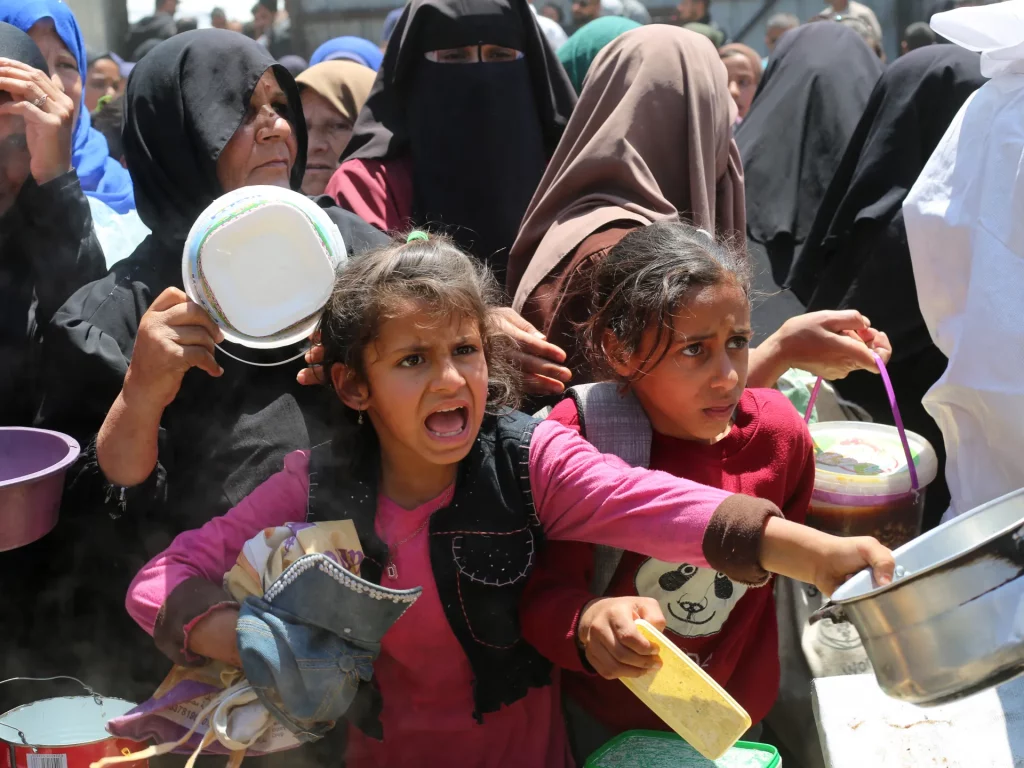
Photo courtesy of Al Jazeera
The world was supposed to have moved beyond colonialism, imperialism, apartheid, the occupation of land and the suppression of human rights. Instead, we entered the era of globalisation, free trade, democracy and self-determination – an era in which people were promised dignity, freedom and better living conditions. Institutions such as the UN and its affiliated bodies were meant to uphold this new world order, rewarding nations that abided by ethical and humanitarian principles and holding accountable those that violated them.
But in the case of Palestinians, this promise has not only been broken; it has been shattered. Over the past decades and especially in recent years Palestinians in both Gaza and the West Bank have endured severe restrictions on their basic rights: the right to life, land, freedom of movement, work, expression and dignity.
Israel has maintained a longstanding occupation, justified under the banner of national security. However, the depth and scale of the ongoing policies suggest a much broader agenda. In the West Bank, socio-economic institutions are systematically undermined. Israeli settlements and roads have fragmented Palestinian land into isolated enclaves while resources and administrative controls remain under Israeli authority. In Gaza a suffocating air, land and sea blockade has left a trail of devastation. Basic infrastructure such as hospitals, schools, water systems and electricity have been severely damaged or destroyed. Even humanitarian aid and food distribution have been restricted and politicised, used as weapons in an ongoing war of attrition.
Civilians, especially women and children, continue to be killed daily. Why? The justification offered is that Hamas remains active and is exploiting the situation. But can that alone account for the scale of destruction inflicted on an entire civilian population?
Israel has been able to carry out these actions with the unwavering support of the US. The US has consistently offered material, legal and diplomatic backing to Israel’s occupation, expansion and military campaigns. Since the October 7 Hamas attacks, the U.S. has stepped up this support—providing financial aid, weapons, and intelligence with the full backing of Congress. This means a global superpower is directly enabling the continuation of occupation and human suffering in Palestinian territories.
So how do we make sense of this in the 21st century? Either colonialism, occupation and the denial of self-determination are unacceptable everywhere or Israel is a unique exception to the global rules-based order. If it is an exception is that because of global consensus or simply the power and influence of a few dominant nations?
Can the world continue to tolerate the near-total destruction of a people to justify the existence or expansion of another? And why must unarmed civilians, especially women and children, bear the brunt of historical and political grievances?
The international community has watched in horror as events have unfolded in Gaza and the West Bank since October 7. US diplomacy has failed to produce tangible results. European nations have also struggled to resolve the hostage crisis or meaningfully respond to the disproportionate Israeli military campaign and destruction of civilian infrastructure.
The forced displacement, starvation and dehumanisation of Palestinians has persisted. However, a glimmer of hope emerged recently: a UN led conference spearheaded by France and Saudi Arabia has rekindled the conversation around a two state solution. More than 100 countries have now recognised the State of Palestine. France, Canada, the UK and potentially Australiaare expected to formalise their recognition at the UN General Assembly meeting in September.
Mass protests and global demonstrations continue to demand an end to arms sales to Israel, a ceasefire and justice for the Palestinian people. The tide of public opinion is turning.
This moment marks a potential turning point not only in the Palestinian struggle but also in Israel’s internal dynamics. International pressure and growing dissent may lead to a political transformation within Israeli society in the years ahead. One can only hope that the long suffering Palestinian people, who have too often been sidelined, even by neighbouring Arab nations, will finally enjoy the basic rights and freedoms that others around the world take for granted.
Even in a world increasingly driven by technology, communication and artificial intelligence, the core values of justice, dignity and humanity must not be forgotten.