
Photo courtesy of Artra
Despite global acceptance of the LGBTIQ+ (Lesbian, Gay, Bisexual, Transgender, Intersex and Queer/Questioning) community, Sri Lanka is one of the 72 countries in the world – almost half of which are members of the Commonwealth – that criminalises private, consensual, same-sex sexual activity among adults.
Same-sex sexual relations among consenting adults are criminalised by Section 365 and 365A of the Penal Code, which state that “carnal intercourse against the order of nature” and “acts of gross indecency” are criminal offences punishable by the law, carrying a sentence of up to 10 years. Section 365 and 365A do not specify that these offences pertain to same-sex sexual relations but they are most often used against LGBTIQ+ individuals due to the vague nature of the provisions and their colonial anti-sodomy legacy.
Britain shed these laws decades ago and has called on its former colonies to repeal the anti-LGBTIQ+ laws introduced by its administrators in the 19th century. But these laws still remain on the statute book. Their existence invites and excuses discrimination and are used to harass, threaten and intimidate anyone who is seen to be deviating from the rigid, heteronormative social structures that govern the Sri Lankan society.
To make matters more complicated, Article 16 of Sri Lanka’s Constitution states that “All existing written law and unwritten law shall be valid and operative notwithstanding any inconsistency with the preceding provisions of this Chapter.” This means that discriminatory laws such as Article 365 and 365A remain valid and operative and cannot be challenged by a citizen in court. The only way to abolish such laws is through the legislative process.
In a historic landmark decision, the UN Committee on the Elimination of Discrimination against Women (CEDAW) found that Sri Lanka’s criminalising of same-sex sexual relations under section 365A of the Penal Code of 1883 was a human rights violation and called for the decriminalising of same-sex relations. The decision was made in response to a case brought by Rosanna Flamer-Caldera, the founder of Equal Ground, to CEDAW in 2022.
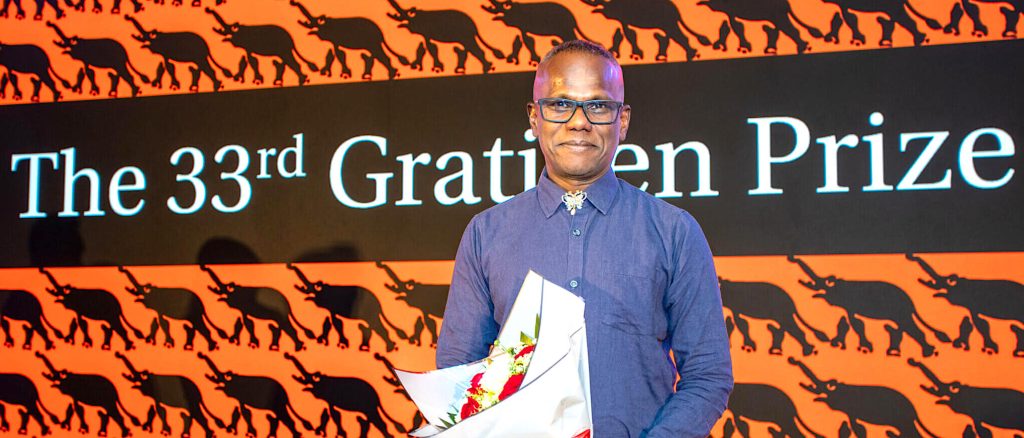
“Various political parties and successive governments have promised us on many occasions that they will abolish these oppressive laws but they have kept postponing the erasure of these laws, saying that there are more problems to be solved. Our lives matter. Every year, month, and week that they take to erase these oppressive laws, people in our community live under constant fear of losing their livelihood, their shelter, their freedom, and even their lives,” said Visakesa Chandrasekaram, winner of the 33rd Gratiaen Prize, said in his acceptance speech.
“I am very proud to stand here as a gay man, a samakaami man. Isn’t it wonderful that I can say it here? But I live in a bubble, protected by my social status, my profession and the very language that I am communicating with you in. Many of the people in my community are not so lucky. Like the Sword of Damocles hanging above our heads are the archaic colonial laws which prohibit our romantic expressions and acts,” he pointed out, adding, “So what can we do? We have to keep telling our stories until they all realise that there are too many of our stories and there are too many of us.”
His winning novel, The Son and the Lover, explores a queer relationship between a Buddhist monk and an Australian man. “It is a brave novel of startling, intense emotion, a book that addresses its characters and Sri Lanka with deep love and rigor. With a fearless and critical eye, The Son and the Lover navigates the polemic intersections of Buddhist ideology and the nature of the modern monastic order, unmasking undercurrents of racism, entitlement, and the preservation of stagnant practices that clash with the pulse of contemporary life,” said the judges’ report.
“In Sri Lankan culture, a Buddhist monk’s sexuality is a taboo subject. Queer desire within the monastic community is even more suppressed. These subjects could even be considered blasphemous. It requires, then, a writer with a special brand of courage to explore a Buddhist monk’s queer sexual orientation. The Son and the Lover brings to light a human experience that some have attempted to render illegible and illegitimate,” it said.
Chandrasekaram answered questions from Groundviews on the inspiration for his novel, the need to repeal unjust laws and the perils of navigating life as queer people in Sri Lanka.
Can you describe the themes and plot of your book?
When you see the title of my book, The Son and the Lover, you probably will remember D.H. Lawrence’s classic, Sons and Lovers. One aspect of the theme I share with Lawrence’s story is the son and the mother relationship. In my book there are two mothers and two sons. Unlike my other work, which deals with political conflicts and realities head on, this story is about relationships. In this book, a Sri Lankan Buddhist monk falls for a Caucasian Australian man. The mothers of the two men have to patiently wait, observing how their sons navigate the labyrinth of transborder, cross-cultural relationships with their families and friends.
What was your inspiration and motivation to write the book?
There were several points of inspiration. There was a Buddhist monk to whom I was very close during my university life. I thought we had a strong romantic attraction but we never expressed each other’s feelings. It remained as a friendship until we drifted apart. The second inspiration could be my mother, who still lives in a village away from suburban Colombo, but who is also very progressive in accepting my sexual orientation with no hesitation. Thirdly, my own experiences of living in cross-cultural relationships, where I have to move swiftly along a steep learning curve to stay afloat in foreign environments. Fourthly, about the blessing and the curse of unconditional love – both being able to give and receive love. And finally, perhaps stepping away from my youth and having come to terms with maturity, ageing and having to see the loved ones leaving me as their time comes.
Do you see your book opening up the space for conversations on gay rights?
I don’t think the book will do miracles. If any of my creative work opened up a conversation on gay rights, it could be Frangipani (2013) film. If you want to facilitate a serious debate about any social or justice issue, you have to communicate in the language of the majority – Sinhalese. If I get to translate this book into Sinhalese, perhaps it could add some weight to the existing queer rights debate. But translation is a tedious job. Although I am quite capable of doing my own Sinhalese translation, I don’t see myself doing it for the next several years. Perhaps I should step back and let someone else do it.
What steps need to be taken by the government for LGBTIQ+ people to enjoy their rights?
Closer to elections, many parties would informally make various promises. But it was the NPP who gave the assurance in their manifesto to guarantee equal rights for LGBT+ people and to repeal sections 365 and 365A and amend section 399 of the Penal Code. In fact, I was one among many of my queer comrades who drafted certain parts of the manifesto. I guess when you have power, there is less you can do. Or rather, they think they should step back and be more conservative to stand in the middle to govern the majority. I understand that the political landscape is very messy. Tamils are rightly demanding justice for those who have been massacred in the final phase of the war. Christians are rightly demanding justice for the Easter bombing victims. We all want the corrupt politicians to return the money stolen from the people. Meanwhile, various racial, religious and political extremist groups are very active, targeting various vulnerable groups, including us queers. On this backdrop, the leaders of the Christian church and Buddhist chapters want us queer people silenced and banished from the political landscape. However, this does not offer an easy excuse for a government headed by a political movement which once promised decriminalisation of the romantic expressions and acts of LGBTIQ+ people. A privileged man like me can survive in this oppressive environment but what about those ordinary queer people who work as street vendors, taxi drivers, factory workers and so forth? We still hear harrowing stories of violence against them on an almost daily basis. No government has the right to ignore our people’s right to exist, our right to life. I have hope about the NPP government. If not now, I hope they will change the laws later. Some of them are still my friends. I have some faith in them.
What are the changes you see now compared to when you were a LGBTIQ+ youth?
When I was growing up, there was no public awareness. There was only one queer organisation, Companions on a Journey, which had to mostly operate underground. There were no queer characters in creative stories except for some jokers playing effeminate men’s roles. There were no labels comprised of multiple identities articulated somewhere in the US. There was, of course, no online dating. We followed the don’t ask and don’t say rule so we were left alone. There was violence, of course, against the most destitute segments of the community. Now I see more awareness because of our visibility in the public domain. I see so much hate against us as much as sympathy. Our rights discourse has become a political football for many players of politics. While our young artists present queer characters in their stories, giving hope, extremist politicians and religious leaders demand our blood. While one bench of the Supreme Court passes a progressive determination accepting our rights to equal existence, another bench may roll back their predecessor’s liberal ideas. While some of our queer community organisations are flooded with funding, others are starved and the infighting in the queer community is disproportionate and disheartening. But we have hope, I guess.
Are there many cases of discrimination and violence against LGBTIQ+ people, especially those who are not protected by their social status?
Yes. Affluent people of any minority rarely suffer violence because they live in gated communities, are protected by social status, are well connected and have all the important people’s phone numbers in their contact lists. It is only those who are poor, lack education and live in rural communities or urban slums who are on the front line of violence. It is no different for queer communities. Our people, especially trans men and trans women, live with the constant fear of being outed and being kicked out of their jobs and houses.