
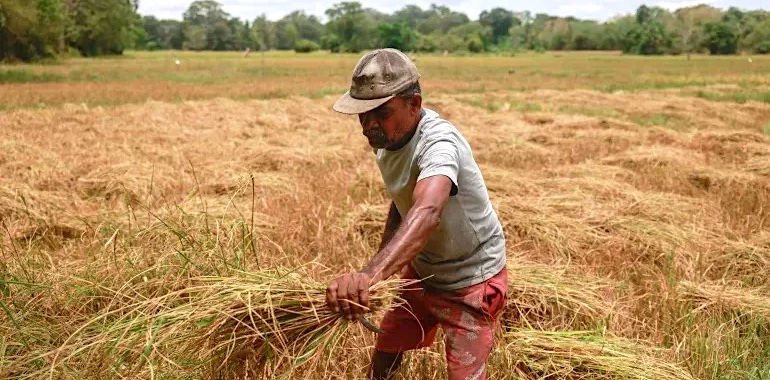
Photo courtesy of The Morning
In the coming months, a climatic shift in the distant Pacific Ocean will deliver a blow to Sri Lanka’s fields, reservoirs and kitchens. An El Niño event, forecast to intensify through the latter half of 2026, historically suppresses the life giving Northeast monsoon. While government agencies prepare their internal protocols, a crucial truth remains: the state apparatus, however well-intentioned, cannot reach every village tank, every malnourished child or every indebted farmer with the speed and trust that you can.
Non-state actors – NGOs, community-based organizations (CBOs), faith-based groups and private foundations – are not merely supplementary relief providers; you are the connective tissue between early warning science and community survival. You hold the relationships, the local knowledge and the operational agility that bureaucracy often lacks. The window to act is not after the paddy withers; it is right now. This article serves as a strategic briefing and a practical roadmap for civil society to pivot from a reactive posture to a proactive, anticipatory action model. The mandate is clear: move before the crisis metastasises.
Why non-state actors are the linchpin
The traditional humanitarian model in Sri Lanka is a predictable and tragic sequence: rains fail, crops die, media reports suffering, government declares an emergency, international donors release funds and NGOs scramble to distribute water bowsers and dry rations. This response model arrives months after the damage is baked in. A farmer has already sold her livestock at a distress price; a child has already suffered a critical episode of wasting.
El Niño gives us something that floods or tsunamis do not: a five month lead time. The forecast is the early warning. Non-state actors are uniquely positioned to translate this lead time into protective action because you are not bound by rigid procurement protocols or electoral cycles. You operate at the speed of trust. A local CBO in Medawachchiya does not need a Colombo-based directive to know which wells will dry up first and which families have no buffer. Your task is to weaponize that granular intelligence with data and pre-positioned resources.
Become the custodians of village water security – The state’s water plan will focus on large reservoirs and major pipes. Your focus must be the 30,000-plus village tanks and the millions of domestic dug wells that serve the rural poor. When the rains fail, these are the first to fail, and the last to be rescued by government bowsers.
What you can do now:
- De-silting and recharge campaigns – Mobilise community labour immediately for a tank to aquifer initiative. The ancient cascade tank system is not just for storing surface water; its primary genius is recharging shallow groundwater. Many tanks are heavily silted. Organize CBOs to clear feeder canals and de-silt tank beds. Critically, dig deep recharge wells in the tank bed itself. Even a small late shower will then rapidly infiltrate the water table, keeping hundreds of domestic wells alive for months. This is not a construction project; it is a community mobilisation effort that you are experts in.
- Domestic rainwater harvesting audits – In water-stressed districts like Puttalam, Hambantota and Jaffna, your field officers should conduct rapid household audits. Check the state of rooftop gutters, clean first-flush diverters and repair storage tanks. A 1,000 litre tank, properly managed, can sustain a family’s drinking needs through the harshest dry spell. You don’t need to buy the tanks; facilitate the cleaning and repair of what exists.
- Community-based water quality monitoring – Train local women’s groups to use simple, low cost test strips (for faecal coliform and salinity) to monitor well water quality weekly. As the drought deepens, saline intrusion on the coast and bacteriological contamination inland will spike. Your community monitors can alert health authorities in real time, serving as a civil society early warning system that the government Medical Officer of Health (MOH) can tap into.
Front run the nutrition crisis with local solutions – If you wait for a medical diagnosis of malnutrition to act, you have already failed. The nutritional shock of El Niño starts the day a family’s home garden wilts and their income from casual farm labour evaporates. NGOs working in child protection, maternal health and livelihoods must integrate nutrition surveillance into all existing programs immediately.
What you can do now:
- The grow out window – Immediately distribute seed kits that are not for the main Maha paddy season, but for short cycle, drought tolerant nutrition. Cowpea, mung bean and specific leafy vegetable varieties can be grown with minimal wastewater in small backyards. Your agricultural extension volunteers should pivot from promoting rice to promoting kitchen garden survival kits. A family with a living home garden does not slip into severe malnutrition.
- Pregnant mother tracking – Your community health volunteers (midwives and feeding program coordinators) are often more trusted than the state clinic system. Create a special El Niño watch list of pregnant and lactating mothers in your project areas. Monitor their Mid-Upper Arm Circumference (MUAC) monthly. A dip in MUAC before a clinic visit is your actionable signal to provide fortified food supplements immediately, bridging the gap before the state’s Thriposha program can adjust its distribution.
- Protecting livestock as a nutritional asset – For many poor families, the household cow or goats are the only source of protein and an emergency cash asset. When drought hits, families distress sell livestock for a fraction of its value. NGOs can pre-empt this by organising fodder banking. Train volunteers to collect and treat paddy straw with urea (a simple technical process) and store it as silage blocks. Providing emergency cattle feed during the drought keeps the milk flowing to children and prevents the catastrophic collapse of the family’s asset base.
The cash liquidity bridge – The biggest failure of the humanitarian system is the gap between the crop failure and the delivery of food aid. That gap is filled by the village moneylender, leading to a debt spiral that can trap a family for a decade. NGOs have pioneered cash transfer programs; now is the time to pre-register and pre-authorise.
What you can do now:
- Pre-crisis beneficiary registration – Do not wait for a harvest failure declaration. If you run a cash program, immediately verify and update the banking and mobile wallet details (e.g., eZ Cash, mCash) of all vulnerable farming families in your database. The delay in aid is often not financial but administrative – the weeks lost finding a beneficiary and linking their ID to a payment method. Complete this administrative backbone now.
- Partner for anticipatory cash – Approach international donors and pooled funds (like the UN’s Central Emergency Response Fund or Start Network) with a proposal for a trigger-based cash release. The trigger is an objective rainfall threshold (e.g., the Meteorology Department confirms that October rainfall in Moneragala was 60% below average). When that trigger fires, your pre-approved funds flow instantly to the pre-registered list. Your role is not to assess damage; it is to provide liquidity so families can buy food from local shops, keeping the local market alive while solving hunger.
- Protecting education – A hidden consequence of economic stress is the removal of children from school, often daughters pulled out to help fetch water from increasing distances. Your local education NGOs and after school programs must establish a drought education guard. This involves community agreements with parents, supported by the provision of water on school premises (via tank storage) and a take home ration tied to attendance, ensuring that a climatic shock does not create a lost generation of learners.
Surveillance and sanitation – Government health systems see the patient; you see the environment that made them sick. The spike in waterborne diseases during El Niño is entirely predictable: as clean water sources vanish, people are forced to use unsafe, shared points.
What you can do now:
- Chlorination at point of source – Instead of waiting to treat diarrhoea at a clinic, your Water, Sanitation and Hygiene (WASH) teams should immediately pre-position supplies of household water treatment solutions (chlorine tablets and liquid chlorine dispensers) at community managed wells designated as last resort, dry season sources. Empowering a local CBO member to be the chlorine monitor for their cul-de-sac ensures that the water people are forced to drink is at least pathogen free.
- Digital syndromic intelligence – Equip your field volunteers with a simple mobile-based protocol. Create a WhatsApp group or use a simple Open Data Kit (ODK)-based form shared with the regional MOH office. If your volunteers report three cases of acute watery diarrhoea in a cluster where there were none last week, you have generated a field intelligence signal that can trigger a targeted medical response weeks before a formal epidemiological report would.
Pre-emptive human-wildlife conflict mitigation – As forests and small tanks dry, elephants will inevitably enter human habitats searching for water. This leads to tragic fatalities on both sides and deepens rural trauma. Environmental NGOs and rural development societies must act now before the peak intrusion months.
What you can do now:
- Community-based electric fence audits – Do not wait for the Department of Wildlife to repair the gaps. Mobilise village societies to inspect community-managed electric fences. Clear the vegetation underneath (which short circuits fences) and establish a solar charger maintenance roster. Most fence failures are preventable with routine community maintenance.
- Water troughs in boundary habitats – Work with wildlife experts to identify strategic locations inside the forest boundary, away from homes, and establish solar powered water points for animals. This provides a reason for elephants to stay within the forest edge rather than raiding village tanks, directly preventing conflict. Your NGO can facilitate the negotiation between the forest department and the community to make this happen.
The NGO coordination imperative
The bane of Sri Lankan humanitarian response has always been siloed efforts – 200 NGOs doing excellent work in 200 separate pockets without a common operational picture. For this El Niño response to be proactive rather than chaotic, the non-state sector must self-organize strengthening their command, control, coordination, communication and networking with other NGOs in the field in tandem with the state apparatuses.
You need to form a Civil Society El Niño Anticipatory Action Consortium immediately. Appoint a lead coordinator for the five areas listed above. Agree on a shared set of triggers based on the Meteorology Department’s rainfall and the Irrigation Department’s reservoir data. Create a shared online dashboard (a simple Google Sheets map, visible to all members) that marks which organization has committed to which Grama Niladhari division for water, nutrition and cash interventions. This map must be shared transparently with the government’s Disaster Management Centre (DMC). When you present a coordinated, rational coverage map rather than a series of ad-hoc requests, you become a strategic partner, not just a subcontractor.
The 2026 El Niño is arriving. The physics of the Pacific Ocean have already cast the die. The paddy fields of Anuradhapura and the tea slopes of Ratnapura will receive less rain. This is the hazard. But whether this hazard becomes a catastrophe, whether a farming family becomes destitute, whether a child becomes malnourished or whether a reservoir’s dry bed becomes a political battleground depends entirely on the human architecture of preparedness.
The state will manage the macro: the reservoirs, the national rice stocks and the power grid. But the state cannot hold the hand of every terrified mother staring at a wilting crop. You can. Your organizations do not need to react to a disaster; you need to act on a forecast. The dry spell has not yet broken our soil. Do not let the inertia of old habits break our people. Prepare now, pre-position now and protect the most vulnerable before the first well runs dry.