
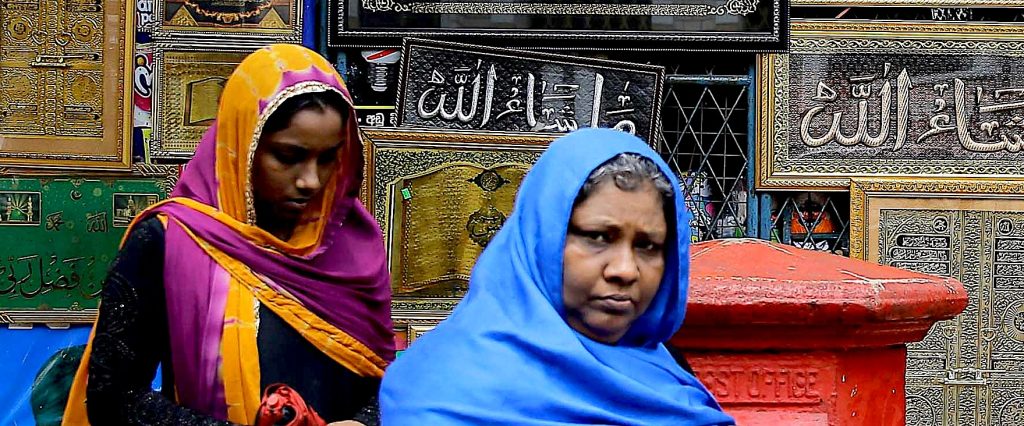
Photo courtesy of NBC News
Sri Lanka invested significantly in rebuilding the physical infrastructure damaged by the war. However, comparable and sustained political commitment was not devoted to rebuilding fractured relationships among its communities.
The recent controversy over the hijab worn by Muslim female health workers at the Kalmunai North Base Hospital is being debated primarily as a dispute about religious freedom, professional uniforms, administrative circulars and institutional authority. Each side has drawn upon law, government circulars, cultural identity and professional regulations to justify its position.
This narrow framing, however, overlooks a more fundamental problem. The controversy is not merely about whether Muslim women may wear the hijab in a hospital. It is another manifestation of Sri Lanka’s failure to transform relationships damaged by decades of ethnic conflict.
The armed conflict ended militarily in May 2009. Nevertheless, the country did not move systematically from the absence of war to reconciliation, conflict transformation and enduring peace. Successive governments gave priority to visible physical reconstruction, namely roads, highways, bridges, public buildings and other infrastructure while the less visible but more difficult task of rebuilding trust between communities remained incomplete. Sri Lanka reconstructed the physical landscape without adequately reconstructing its fractured social landscape.
This article does not attempt to decide which side is legally or administratively correct in the hospital uniform dispute. Its purpose is to use the contrasting responses at the Kalmunai North Base Hospital and Ashraff Memorial Hospital to examine a wider public question: why, 17 years after the war ended, can a workplace disagreement still divide neighbouring communities? Drawing on practical peacebuilding experience and relevant research, the article argues that Sri Lanka rebuilt infrastructure after the war but did not give equal and sustained attention to rebuilding trust, recognising different experiences of suffering and transforming relationships among communities.
Parallel institutional responses
The events surrounding the Kalmunai North Base Hospital demonstrate this post-war failure with unusual clarity. Nine newly appointed Muslim female health workers who reported for duty wearing the hijab were allegedly prevented from doing so. The hospital’s position was reportedly supported by employees who argued that official uniforms and existing Health Ministry circulars should be followed without religious differentiation. A demonstration was subsequently held by hospital staff and others in support of the institution’s position.
The nine women were then temporarily transferred to the nearby Ashraff Memorial Hospital where they received a highly visible welcome. Another demonstration was held supporting their right to wear the hijab and condemning the opposition they had experienced at the Kalmunai North Base Hospital.
The contrast is striking. At one public hospital, employees demonstrated against accommodating the hijab and in support of applying the official circular. At another public hospital, the same nine women were welcomed and employees demonstrated against the earlier opposition to the hijab.
The issue was thus transformed from an administrative disagreement into two opposing public responses shaped by communal identity. One hospital appeared to symbolise resistance to the hijab; the other appeared to become a protective space for Muslim identity. A matter that should have been handled within a shared civic and professional framework was instead expressed through competing collective identities.
Not every participant was necessarily motivated by racism or communal hostility. Some may genuinely have been concerned about institutional discipline. Others may genuinely have been defending women whom they believed had been humiliated or discriminated against. Yet, in a post-war society, the meaning of collective action extends beyond individual intention. When employees of two neighbouring public hospitals mobilise around opposing ethnic and religious positions, it indicates that the deeper relationship between the communities remains divided.
Both responses may have strengthened solidarity within each community. They weakened the possibility of solidarity across communities.
From the abaya debate to the hijab controversy
In his Daily FT article, Abaya and Muslim Identity Politics, Dr. Ameer Ali locates the Kalmunai dispute within the changing cultural identity of Sri Lankan Muslims. He argues that Arab-influenced attire, religious conservatism and Muslim identity politics have increased social distance between Muslims and other communities. He also criticises Muslim politicians for mobilising around symbolic issues such as the abaya while displaying less enthusiasm for substantive reforms affecting Muslim women, particularly reform of the Muslim Marriage and Divorce Act.
These concerns should not be dismissed. The Muslim community must engage in serious internal reflection. It should examine whether women are sometimes pressured to demonstrate religiosity through clothing; whether cultural practices are incorrectly presented as unalterable religious obligations; and whether politicians exploit visible identity issues while avoiding difficult reforms within the community.
However, explaining the controversy mainly through the Arabisation of Muslim dress or Muslim self-alienation is insufficient. It places too much explanatory weight on the cultural behaviour of one community while paying inadequate attention to the historical, political and relational context in which such symbols acquire confrontational meanings.
Neither the abaya nor the hijab created Tamil-Muslim mistrust. The present hijab controversy entered a social environment in which mistrust, competing memories, territorial anxieties and political insecurity were already present. The hijab is the visible object around which this conflict has formed; it is not necessarily its root cause.
Cultures are neither permanent nor isolated. The saree, osariya, salwar kameez, sarong, shirt, coat and trouser have all been shaped by trade, colonialism, migration, religious exchange and modern fashion. Describing one community’s cultural transformation as natural development while characterising another’s as foreign penetration creates an unequal standard of cultural authenticity. The more important question is not whether the abaya originated in Sri Lanka but why a piece of clothing has become powerful enough to mobilise two neighbouring communities against each other.
The difference between ending war and building peace
Johan Galtung’s distinction between negative peace and positive peace provides a useful framework. Negative peace refers mainly to the absence of direct violence. Positive peace requires transformation of the structures and relationships that produce inequality, fear, humiliation and recurring conflict.
According to John Paul Lederach, “Conflict transformation views peace as centered and rooted in the quality of relationships.” His insight directs attention away from peace as a completed political event and towards peace as the continuing quality of relationships among people, communities and institutions. In the Sri Lankan context, this means that the end of armed confrontation and the construction of infrastructure cannot, by themselves, demonstrate that the relationships damaged by war have been transformed.
Sri Lanka achieved a form of negative peace in 2009. Armed confrontation ended, major roads reopened and economic activities gradually returned. Positive peace, however, required truth-seeking, acknowledgement of suffering, accountability, reparations, institutional reform, restoration of dignity and sustained reconstruction of intercommunity trust. Those processes were delayed, politicised, fragmented or implemented without adequate depth.
Lederach’s concept of conflict transformation is equally relevant. Conflict resolution generally attempts to settle a particular dispute. Conflict transformation asks why similar disputes continue to emerge, what relationships sustain them, what historical narratives shape them and what structures reproduce division.
From this perspective, transferring the nine Muslim employees may contain the immediate controversy but it does not transform the conflict. It may reinforce the idea that a Muslim woman who wishes to maintain her religious identity belongs in a Muslim-associated hospital rather than in a Tamil-associated institutional space. That is not coexistence; it is the administrative management of separation.
If employees of one hospital demonstrate against the hijab while employees of another demonstrate in its defence, the country is not witnessing an ordinary uniform dispute. It is witnessing the geographical and institutional reproduction of ethnic boundaries.
The neglected Tamil-Muslim dimension
Sri Lanka’s conflict is commonly narrated as a struggle between the Sinhala majority State and the Tamil minority. That dimension remains central. Yet this binary narrative frequently overlooks the distinct experience of Muslims, particularly Tamil-speaking Muslims in the Northern and Eastern Provinces.
Tamils and Muslims share language, geography and many cultural practices. They have also experienced competition over land, political representation, administrative authority, economic resources and security. During the war, these tensions developed into open violence.
In August 1990, Muslim worshippers were massacred inside mosques in Kattankudy. Muslim civilians were also killed in Eravur and elsewhere. In October 1990, the LTTE forcibly expelled the Muslim population of the Northern Province. Tens of thousands lost homes, land, businesses and their connection to places where their families had lived for generations. Research continues to show that resettlement, land ownership and recognition remain unresolved decades later.
Tamil communities carry their own profound memories of massacres, disappearances, displacement, detention, military violence, land occupation and destruction of social life. Muslims associated with state-supported security structures were accused of participating in violence against Tamil civilians. Entire communities were judged according to the actions of militants, security personnel or political actors claiming to represent them.
These histories produced competing narratives of victimhood. Each community remembers clearly what was done to it but often has less space in its collective narrative for acknowledging what was done to the other.
The war ended without a sustained Tamil-Muslim process of truth-telling, acknowledgement and reconciliation. Consequently, memories continued to be transmitted separately. This may be described as parallel memory: Tamil suffering is remembered primarily within Tamil society while Muslim suffering is remembered primarily within Muslim society. Both histories are real but their separation prevents shared moral understanding.
Warnings from which Sri Lanka failed to learn
Kalmunai is not the first warning. Sri Lanka has experienced several incidents showing how quickly clothing, religion and public institutions can become ethnic battlegrounds.
In 2018, Muslim teachers at Sri Shanmuga Hindu Ladies’ College in Trincomalee encountered opposition to wearing the abaya. Protests and counter-protests followed, producing a serious rupture in Tamil-Muslim relations. The Human Rights Commissionconcluded that preventing the teachers from wearing the abaya violated constitutional protections.
In Awoof v. Janadipathi Balika Vidyalaya and Others (2014), a Muslim mother challenged restrictions preventing her from entering a school in Muslim attire. The Supreme Court directed that Muslim mothers could enter in traditional attire provided their faces remained uncovered for identification.
The Easter Sunday attacks of 2019 inflicted terrible suffering upon Christian communities and generated legitimate demands for truth, security and accountability. Yet suspicion was often extended from the perpetrators to the wider Muslim population. Muslim clothing, businesses, places of worship and religious education came under intense scrutiny. Even women wearing a hijab that did not cover the face sometimes encountered restrictions in public institutions.
The compulsory cremation policy during the COVID-19 pandemic further intensified Muslim feelings of religious humiliation. Meanwhile, Tamil grievances concerning missing persons, land, militarisation, accountability and political power sharing remained unresolved. Anti-Muslim violence in Aluthgama in 2014 and Digana in 2018 had already demonstrated the destructive potential of rumours, hate speech and majoritarian mobilisation.
Each incident should have initiated a deeper national conversation about identity, institutional neutrality, equality and intercommunity relations. Instead, most were treated as separate crises. Public attention diminished, political actors moved on and the underlying relationships remained unchanged. Sri Lanka repeatedly responded to symptoms without transforming the conflict that produced them. Kalmunai is therefore not an isolated warning; it is the latest warning in a sequence from which the country has failed to learn.
How public institutions become communal spaces
The Eastern Province contains a particularly complex relationship between ethnicity, geography and public institutions. Hospitals, schools, divisional secretariats, local authorities, land offices and religious sites may be legally public but socially associated with particular communities.
This can produce a sense of communal ownership: the belief that an institution situated in a particular ethnic area should reflect and protect the identity of the locally dominant community. The appointment, language, attire or religious practice of someone from another community may then be seen not simply as an individual difference but as an intrusion into communal space.
The Kalmunai North Base Hospital and Ashraff Memorial Hospital are both public healthcare institutions yet their locations, names, staff composition and surrounding populations give them different communal associations. Against this background, transferring Muslim women health workers from one institution to the other cannot be understood as a purely neutral administrative decision.
The opposing demonstrations reinforced these invisible communal boundaries. One space appeared to say, our institution must preserve its existing norms. The other responded, our institution will protect our women and identity. This is how public institutions can quietly become divided along ethnic lines. A hospital ceases to be seen as a shared national institution and becomes their hospital or our hospital. Such division may exist without physical violence but it is inconsistent with enduring peace.
How communities push each other further apart
Social identity theory, associated with Henri Tajfel and John Turner, explains how people classify themselves and others through group membership. Under conditions of insecurity, members favour the in-group and interpret the behaviour of the out-group with greater suspicion.
A decision by particular hospital administrators can therefore be described as Tamil opposition to Islam. The response of several Muslim politicians can be characterised as Muslim cultural expansion. Individual actions become evidence against entire communities.
This creates a cycle in which communities push each other further apart. One community expresses its identity more visibly because it feels excluded. The other sees that visibility as a threat and responds defensively. That response then confirms the first community’s belief that its identity is under attack.
The parallel hospital demonstrations illustrate this cycle. What one community regarded as defence of institutional discipline was perceived by the other as religious exclusion. What the second regarded as defence of dignity was perceived by the first as confrontational identity politics. Without a relationship capable of carrying disagreement, every action is interpreted through suspicion.
Rebuilding infrastructure without rebuilding trust
After 2009, successive governments promoted reconstruction largely through physical and economic development. Highways were opened, roads carpeted, bridges constructed, railway services restored and new government buildings erected across war-affected regions.
These investments were necessary. The mistake was not constructing roads and buildings. The mistake was assuming that physical development could substitute for reconciliation. A highway can connect two towns without connecting the people who live in them. A new building can accommodate several communities while remaining divided by prejudice and mistrust. Economic growth can reduce poverty without addressing humiliation, historical memory or unequal belonging.
Successive governments treated reconciliation as secondary to development or as something that would emerge naturally once infrastructure and economic opportunities improved. But unresolved identity conflicts do not disappear through construction projects. They may instead become embedded within the new institutions.
The state invested significantly in rebuilding what the war had physically destroyed. It invested far less political courage in rebuilding what the war had socially destroyed. This was a fundamental post-war policy failure.
Why short term peacebuilding projects were insufficient
International organisations and civil-society organisations implemented numerous programmes on reconciliation, interfaith dialogue, social cohesion, youth participation and peaceful coexistence. Many created valuable relationships and prevented local tensions from escalating.
Nevertheless, these efforts were frequently short term, project-based and geographically limited. Success was measured through workshops, participants, dialogues and publications. Less attention was given to whether relationships endured, institutions changed or communities developed shared mechanisms for managing future disputes.
A workshop may bring Tamil and Muslim participants together for one or two days. They then return to political parties, schools, hospitals, religious organisations and media environments that remain ethnically separated. Without institutional transformation, dialogue becomes an occasional activity rather than a continuing social practice.
Sri Lanka required a national process connecting truth, acknowledgement, accountability, institutional reform and community level relationship building. Instead, reconciliation was fragmented across temporary initiatives while political structures continued to reward ethnic mobilisation.
Responsibilities within the Muslim community
A deeper analysis must not turn Muslims into passive victims who carry no responsibility for intercommunity relations. Sections of Muslim political and religious leadership have failed to engage critically with changing Muslim identity. Misinformation, ideological rigidity and insufficient comparative religious education remain concerns.
Political leaders often respond vigorously when a visible identity symbol is challenged but remain comparatively silent regarding injustices experienced by Muslim women within the community. Continuing resistance to meaningful reform of the Muslim Marriage and Divorce Act is an important example. Defending Muslim women’s attire while failing to defend their equality within family law is an obvious contradiction.
Living in a multicultural society requires Muslims to understand the histories, fears, sacred spaces and sensitivities of Tamils, Sinhalese, Hindus, Buddhists and Christians. Not every disagreement should immediately be transformed into evidence of hatred against Islam.
At the same time, integration cannot require a minority to make itself culturally invisible. A plural society is not created by compelling everyone to adopt the identity of the majority or locally dominant community. Integration means participation with dignity, not assimilation through abandonment of difference. Every community must learn that recognising another identity does not diminish its own.
What a peacebuilding response should look like
A peacebuilding response should begin by separating the immediate administrative question from the deeper relationship problem. The Health Ministry must clarify the uniform rule and any lawful space for religious accommodation across all public hospitals. The affected women, hospital management and staff representatives should be heard through a credible process that protects dignity, professional standards and patient safety. Clear rules are important but the way those rules are communicated and applied is equally important in a society shaped by conflict.
The temporary transfer may have reduced immediate tension and allowed the women to work. However, it should not become the final solution. If transfer is treated as the answer, it can strengthen the idea that people should work only in institutions associated with their own community. Any temporary arrangement should therefore be followed by an independent review, facilitated discussion, a written decision and measures to prevent retaliation or recurrence.
The two hospitals also need opportunities to rebuild professional relationships around what they share: patient care, public service, medical ethics and the duty to treat every citizen with dignity. Joint professional exchanges and problem solving sessions may be more useful than one time programmes on abstract coexistence because they connect peacebuilding to the daily work of the institutions.
Community and religious leaders from both sides have a responsibility to reduce inflammatory language and reject collective blame. They should create a standing Tamil-Muslim mechanism in the Kalmunai area that can respond early to disputes involving hospitals, schools, land, religious practice or public appointments before those disputes become communal confrontations.
Peacebuilding organisations must also reconsider how success is measured. Counting workshops and participants is not enough. The real test is whether institutions can manage disagreement fairly, whether grievances are resolved without public escalation, whether staff trust the process and whether people from different communities can continue working together after a dispute. These are the signs that relationships and institutions, not only infrastructure, are being rebuilt.
Peace remains unfinished
The Kalmunai North Base Hospital controversy is not simply a dispute over the hijab worn by Muslim women. Nor can it be explained entirely through administrative circulars, religious doctrine, professional uniforms or Muslim identity politics. It is a manifestation of Sri Lanka’s unfinished conflict.
The most troubling aspect is not merely that one hospital opposed the hijab or that another welcomed the affected women. It is that neighbouring public institutions became sites of opposing communal mobilisation. The demonstrations revealed the continuing emotional and institutional distance between communities that have not adequately confronted their shared and conflicting histories.
Sri Lanka has received many previous warnings: the Shanmuga College dispute, the Northern Muslim expulsion, the Kattankudy massacre, unresolved Tamil grievances, Aluthgama, Digana, the Easter Sunday attacks, restrictions on Muslim attire and the compulsory cremation controversy. Yet each crisis was treated separately, allowing the deeper conflict to survive.
The hijab is only the latest object through which old fears are being expressed. Tomorrow, the object may be a school, a hospital, land, a religious site, an administrative boundary, a language policy or a public appointment.
Until Sri Lanka moves from negative peace to positive peace from the mere absence of war to truth, recognition, justice and transformed relationships such incidents will continue to emerge.