
Photo courtesy of University of Sri Jayewardenepura
Today is International Safe Abortion Day
I have had two abortions. Both took place after the birth of my son during a period when my first marriage had ended and I was in another relationship. I was 29 or 30 years old. I was already a single mother and the primary financial support for a household of seven people.
I did not want the abortions. My partner at the time came from a family and cultural context in which having a child outside marriage could have carried serious consequences for him. I was told that he might even be killed. I initially insisted that I would have the child and raise the child myself whether he remained in my life or not.
But decisions like this are rarely made inside the clean, abstract moral landscape in which the abortion debate is usually conducted. I had to consider the child I had already brought into the world. I had to consider the people who depended on my income. I had to consider what would happen if I could not work while pregnant or while caring for an infant. I had to consider whether another child would have a present and willing father, whether I could provide a reasonable quality of life and whether my existing family could survive the financial consequences.
Taking a year or more away from earning would not merely have made life uncomfortable. It could have left all of us without a home. That was the reality in which I made my decision.
The experience of an illegal abortion
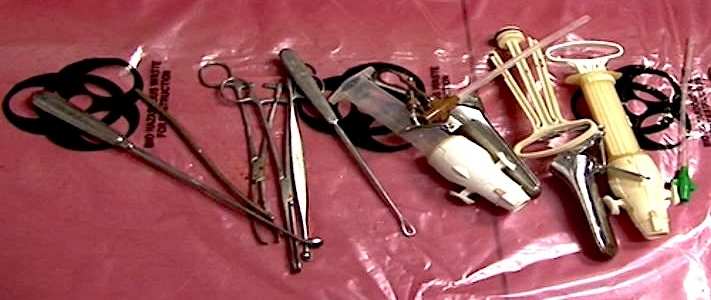
The place where I underwent the procedure frightened me. It was hidden, dingy and seemingly assembled without much care. I did not know whether the woman assisting was a nurse. There was no meaningful conversation about what would happen, no psychological support, no proper explanation of possible complications and no clear instructions about aftercare. Something was inserted to induce the termination. I was told that I would bleed, that it might be painful and that I could take two Panadol tablets. That was, essentially, the entirety of the care I received.
I went home to endure the pain and bleeding without knowing what symptoms might indicate that something had gone wrong, where I could safely seek help or whether asking for help could expose me to judgment or legal consequences.
This is one of the consequences of criminalisation that is often missed. It does not necessarily prevent an abortion. It prevents the woman from insisting upon proper standards of care. It removes accountability from the provider and leaves her uncertain about whether she can seek medical assistance if complications arise.
A Sri Lankan study involving 56 women admitted to five government hospitals for post-abortion care found that fear of being reported to the police contributed to delays in seeking treatment. Participants were also afraid of stigma and discrimination in government hospitals and more than 10% reported verbal abuse from healthcare workers.
When a law causes a woman to delay seeking help while bleeding or developing an infection, that law is not protecting life.
Grief and relief can exist together
The emotional aftermath was devastating. I had already experienced pregnancy and motherhood. When I carried my son I formed an intense relationship with the being growing inside me. That experience shaped how I understood my later pregnancies.
Following the abortions, I experienced shame, guilt and profound self-loathing. I hated my partner, my circumstances and myself. I prayed for forgiveness. For a long time, I believed I had surrendered the right ever to become a mother again.
At the same time, there was relief. I did not have to find the resources to feed and support another child. That may sound harsh but it was true. These emotions did not cancel each other out. Relief did not mean that I was indifferent. Grief did not mean the decision was wrong. It meant that I was a human being responding to a complex and painful reality.
This complexity is often erased from public discussion. Women who have abortions are placed into opposing caricatures. We are imagined either as careless women casually disposing of pregnancies or as helpless victims who must regret our decisions forever. Neither allows us to be complete people.
An abortion can be a rational decision and still carry grief. It can be the best available decision while remaining one we wish we had never been required to make. A woman can mourn what might have been without accepting that she should have been forced to continue the pregnancy.
With time, reflection and psychological processing, I stopped describing myself as a murderer. I came to understand that I had made the decision I believed was most responsible for myself, my son and the other people who depended upon me.
If I could sit beside the woman I was then, I would tell her: you are making the best decision you can within the circumstances you have. You are considering the child you already have and the people whose lives depend upon yours. You deserve care, accurate information and someone to remain with you through this. You are going to be all right.
No reliable contemporary abortion data
It is impossible to state precisely how many abortions currently take place in Sri Lanka. That absence of data should not be mistaken for an absence of abortions. When an activity is criminalised and heavily stigmatised, the people involved conceal it. Providers do not report it, women may not disclose it and complications can be recorded without identifying the induced abortion that preceded them.
One national study conducted around 1999 estimated an induced abortion rate of 45 abortions for every 1,000 women aged 15 to 49. A later Ministry of Health estimate reported in 2016 suggested that approximately 658 abortions occurred every day. If applied across a year, that would amount to roughly 240,000 abortions.
These estimates are old and their methodologies are not equally accessible for scrutiny. They should therefore be attributed and treated cautiously. But even allowing for uncertainty, they reveal a fundamental fact: criminalisation has not made abortion disappear.
Abortion made clandestine
A 2024 analysis of Sri Lanka’s 2016 Demographic and Health Survey found that 16.14% of ever-married women aged 15 to 49 had experienced a terminated pregnancy. Importantly, this category included miscarriage, stillbirth and induced abortion so it cannot be presented as an abortion rate. It nevertheless demonstrates how common pregnancy loss and termination are in women’s reproductive lives.
Globally, the World Health Organisation estimates that about 73 million induced abortions occur each year. About six out of every 10 unintended pregnancies end in abortion and an estimated 45% of abortions are unsafe. More than half of the world’s unsafe abortions occur in Asia, particularly in South and Central Asia.
WHO also reports that mortality from abortions performed safely is negligible, at fewer than one death per 100,000 procedures. In settings where unsafe abortions are common, mortality can exceed 200 deaths per 100,000 abortions.
The danger does not arise simply because a pregnancy is terminated. It arises when women are denied accurate information, quality medicines, trained assistance, hygienic conditions, follow up care and the freedom to seek help promptly when something goes wrong.
A law that ignores rape, incest and childhood
Sri Lankan law permits abortion only when it is necessary to save the pregnant woman’s life. Rape, incest, severe foetal abnormality and grave threats to physical or psychological health do not ordinarily provide independent legal grounds for termination.
This means that a girl who becomes pregnant through statutory rape may be legally required to continue the pregnancy. A survivor of incest can be required to carry the physical consequences of that abuse inside her body. A woman informed that her foetus has a condition incompatible with life may still be required to continue the pregnancy and birth.
A 2024 UNFPA Sri Lanka brief reported that teenage pregnancies accounted for 3.8% of registered pregnancies in 2023, down from 6.5% in 2009. The national improvement conceals considerable regional variation. The same report recommends legalising termination in cases of incest and statutory rape.
The question is not only whether the pregnancy can be physically endured. It is whether the state has the moral authority to compel a survivor, including a child, to undergo pregnancy and childbirth because legislators refuse to provide another option.
Criminalisation creates inequality
Women with money, knowledge and social connections may still find qualified providers, obtain genuine medication and access private medical care if something goes wrong.
Poor women face a different reality. They are more likely to rely upon unknown providers, unsafe environments, unverified medicines or dangerous methods. They may delay seeking emergency care because they fear exposure, humiliation or prosecution. They may be unable to leave work, travel to a provider or pay for follow up treatment.
The law may be written as though it applies equally to everyone. Its dangers do not. Criminalisation turns safety into something that can be purchased. It allows abortion to continue while determining which women will be protected and which women will bleed in secrecy. The WHO is unequivocal that restricting access to abortion does not reduce the number of abortions. It affects whether those abortions are safe and dignified.
Safe abortion is not an endorsement of careless decision making
Supporting access to safe abortion does not require us to pretend that every abortion is emotionally easy. Nor does it require every woman to feel the same way about her pregnancy, her decision or the meaning she gives it.
My experience included coercion, fear, grief, spiritual conflict and financial necessity. Another woman’s experience may include certainty. Another may experience sadness without regret. Another may feel only relief. None of us should be required to adopt someone else’s emotional response to justify receiving healthcare.
Nor should my former guilt be used as an argument for denying another woman autonomy over her body. That guilt belonged to my history, beliefs and circumstances. I would never place it upon someone else by telling her that she is a sinner or a murderer.
The purpose of legal, regulated abortion care is not to encourage women to become pregnant or to terminate pregnancies casually. It is to ensure that when a termination occurs, the woman does not have to enter a concealed room, submit to a procedure she does not fully understand, and return home without aftercare or anyone to contact if she begins to haemorrhage.
Safe abortion means informed consent. It means accurate information, properly trained providers, quality medication, sanitary clinical conditions, pain management, confidentiality, compassionate counselling when desired, and post-abortion care without punishment.
It also means being able to identify reproductive coercion. I needed someone to ask whether this was truly my decision, whether I was safe in my relationship and whether I understood all my options. I received none of that.
The choice is not between abortion and no abortion
Sri Lanka’s actual choice is between acknowledging abortion and continuing to hide it. Abortions are already happening. Women are already making decisions within circumstances shaped by poverty, violence, failed contraception, family responsibility, unstable relationships, health risks and the absence of meaningful social support.
We can continue to condemn them and leave them to navigate an unregulated underground system or we can reduce unwanted pregnancies through comprehensive sexuality education, accessible contraception and support for parents while ensuring that those who need an abortion can obtain one safely.
Years after my own experience, I do not need anyone to approve of the decision I made but no woman should have to undergo what I did simply because the law is more comfortable denying abortion than accepting responsibility for the women whose lives it places at risk. Abortion does not disappear when the law refuses to see it. The woman simply disappears from the law’s concern.