
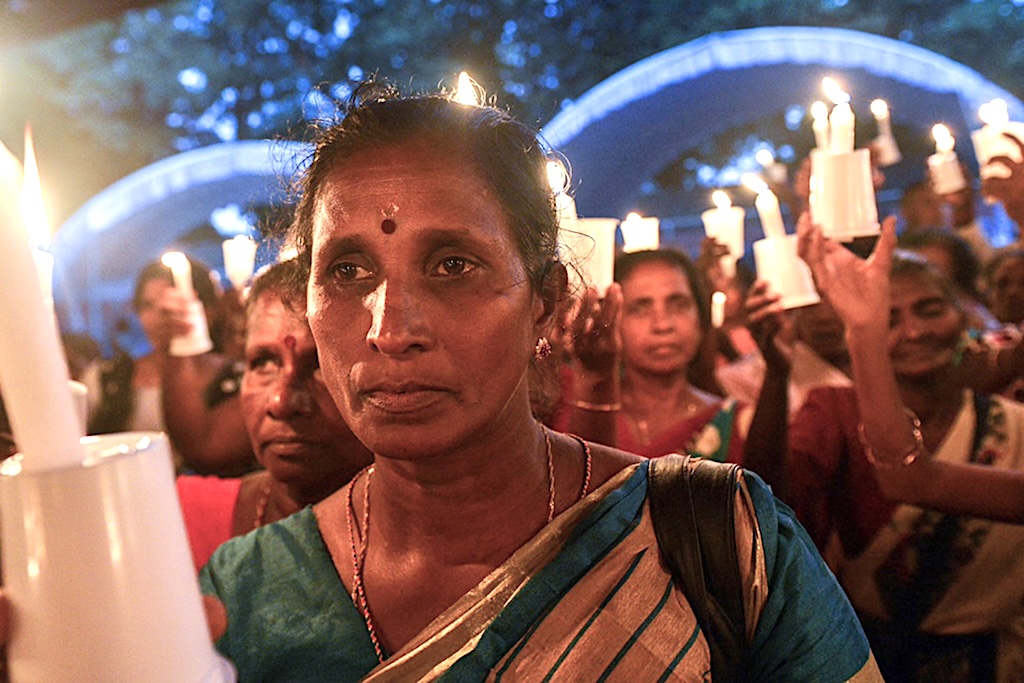
Photo courtesy of Council on Foreign Relations
Tamil politics needs stronger public accountability. Political parties must answer for their decisions but accountability cannot stop at elections or depend on which party people support. People must be able to shape political priorities, question those who claim to represent them and challenge governments when they fail to meet their obligations. Tamil society has repeatedly shown that people can mobilise around shared concerns. The challenge is to turn that collective strength into sustained public influence over political decisions.
The 2024 parliamentary election changed Jaffna’s political landscape. The NPP won three of the district’s six seats, receiving 80,830 votes or 24.85 per cent of the vote. Its success challenged established patterns of Tamil electoral politics. But a change in representation does not automatically mean a change in how power is exercised. The NPP, like Tamil political parties, must be judged by its actions and its willingness to answer for them. The question is not simply who represents the people but whether people can hold their representatives and those in power accountable.
Beyond parties and protest
Tamil political causes often become closely associated with particular parties or leaders. Land disputes in Thaiyiddy, for example, may be identified with one political group while memorialisation or constitutional reform may be associated with others. These associations can help sustain campaigns but they can also turn shared concerns into party property. When that happens people may reject a legitimate cause because they oppose the party raising it, while criticism of a party can be treated as opposition to the cause itself. This weakens public pressure on the issues that matter.
Tamil society has a history of collective action that shows this is not inevitable. The February 2021, the P2P march from Pottuvil to Polikandy brought together people around concerns including land, militarisation, memorialisation, political prisoners, enforced disappearances and the Prevention of Terrorism Act. It also raised Muslim concerns, including opposition to the forced cremation policy imposed during the COVID-19 pandemic. The march demonstrated that people with different priorities could mobilise around shared concerns without abandoning their distinct interests. But a successful protest does not, by itself, establish a lasting way for people to influence political decisions or hold those who claim to represent them accountable.
The Tamil People’s Council (TPC), established in 2015, was another attempt to create a space for discussion beyond the established party system. It brought together political and civil society figures and contributed to developing proposals for a political solution, including a report on the national question. Its experience also raises questions about how such forums sustain public confidence and remain independent of individual political ambitions. C.V. Wigneswaran’s subsequent political path, including his leadership of the Tamil Makkal Koottani, affected the perception of the TPC as a broader forum for Tamil political discussion. The lesson is not that such initiatives are futile but that their credibility depends on their independence, purpose and accountability to the people they seek to serve.
More recent events show both the potential for solidarity and the difficulty of sustaining it. Protests against the proposed Kivul Oya project brought together a broad range of Tamil political actors, civil society groups and local residents. Concerns included the proposed use of land under the Mahaweli L Scheme, the effects on residents and agricultural livelihoods and fears of demographic change. Despite their political differences people were able to mobilise around the future of their communities. The protests showed that common concerns can still bring people together across party lines.
The response to the death of Edirmanasingam Kabilraj in Mullaitivu in August 2025 was markedly different. ITAK called a hartal demanding justice and drawing attention to the military presence in the North and East. Three army personnel were arrested in connection with the incident. Yet the protest faced resistance and the debate extended beyond its purpose to attacks on the party organising it. Some political opponents, particularly those hostile to M.A. Sumanthiran and ITAK, criticised the initiative. Tamil NPP supporters also attacked the protest and some responses went further by defending or excusing the government’s conduct.
There are legitimate reasons to question a party’s leadership, decisions or methods of protest. Opposition to the hartal did not necessarily mean support for the government, and criticism of ITAK should not automatically be treated as hostility towards Tamil interests. But there is a difference between questioning how a protest is organised and justifying the conduct of the state that the protest challenges.
Tamil politics has long been marked by bitter rivalries. Supporters of parties such as the EPDP or politicians such as Douglas Devananda and Angajan Ramanathan have opposed Tamil nationalist parties. There have also been attempts to disrupt or weaken protests organised by political opponents. What appears increasingly troubling under the NPP government is that some Tamil voices are not merely opposing a Tamil party; they are also defending or excusing the actions of the government that party is challenging. This goes beyond familiar party rivalry. It risks making scrutiny of state power depend on whether people support the government responsible.
A death that raises questions about military conduct deserves scrutiny regardless of which party calls for a protest. The same principle applies to land disputes and other matters of public interest. Social media can deepen divisions when people who question political leaders are labelled traitors, anti-Tamil or anti-nationalist. Citizens must be free to disagree with Tamil parties without being accused of betraying their community. Equally, hostility towards a party should not become a reason to excuse state conduct. The P2P march and Kivul Oya protests show that collective action across political differences is possible; the response to the Kabilraj hartal shows how easily party loyalties can undermine it.
This raises a wider question: who shapes Tamil political priorities and to whom must those who influence them answer? Political parties are only part of the picture. Civil society organisations, international partners, professional groups and the diaspora also influence which issues receive attention, how campaigns are organised and whose voices are heard.
Who shapes Tamil political priorities?
The Tamil diaspora has contributed to human rights advocacy, education, livelihoods and community development. Its resources, knowledge and international networks can strengthen efforts in the North and East. But these contributions should expand the choices available to people on the ground, not replace their judgement. Communities affected by decisions need a meaningful role in setting priorities, deciding how resources are used and assessing whether initiatives meet their needs. Funding and international access can give some actors greater influence than others, so local groups must be able to question priorities and disagree with influential supporters without fear of losing their backing.
Civil society organisations and international partners also help raise neglected issues, support affected communities and bring evidence into public debate. Yet access to donors, diplomats and international forums does not automatically make an organisation representative of the people whose interests it claims to serve. Their priorities and decisions, too, should be open to scrutiny.
The Kivul Oya dispute illustrates why this matters. Questions about land ownership, land use, consultation and local livelihoods cannot be settled through party statements alone. People who may lose land or see their livelihoods affected need reliable information and a genuine opportunity to influence decisions before they are made. Consultation should allow communities to shape outcomes, not simply respond to decisions already taken.
Meaningful participation also depends on people’s circumstances. Those struggling with insecure work, debt or the loss of land may have little time or capacity to attend meetings, organise campaigns or challenge powerful actors. If public participation is to influence decisions, the voices of those most affected must carry weight, rather than being overshadowed by those with greater resources, political access or international connections.
Efforts to build cooperation among Tamil political parties remain important. In July 2026, six Tamil-speaking parties announced a common political platform covering issues such as constitutional reform, Provincial Council elections and land. Such cooperation can strengthen efforts to pursue shared demands. But agreement among parties is only one part of the process. People also need to know what the parties have promised, what they have done, where they disagree and why proposed changes have not materialised.
The state remains responsible for addressing power sharing, land rights, accountability and equal citizenship. Divisions among Tamil political actors do not excuse successive governments from meeting those obligations. Nor should disappointment with a Tamil party become a reason to excuse the conduct of a government. Stronger accountability within Tamil politics and stronger demands for accountability from the state must go together.
Building public accountability
The P2P march and the TPC show that efforts to create broader political spaces are not new. Kivul Oya demonstrates that cooperation across political differences remains possible while the response to the Kabilraj hartal shows how party loyalties can undermine solidarity. The task is not simply to organise another protest or establish another forum. It is to find practical ways to sustain public engagement and keep political commitments open to scrutiny after immediate mobilisation ends.
Tamil society does not necessarily need another permanent institution. Existing political, civic, professional and community organisations could help develop a process independent of party control. Where a genuine gap exists, a time limited initiative could bring together people from different backgrounds to consult communities and track progress on a small number of issues such as land disputes, devolution and accountability.
Universities, regional bar associations and civic groups could help organise such a process but no single organisation should be presumed to represent the whole community. People directly affected by the issues must have a meaningful role. Families of disappeared persons, for example, should help shape discussions on accountability without being expected to carry the burden of organising the process themselves. Membership, funding and decisions should be transparent with rotating leadership, public financial reporting and clear rules for managing conflicts of interest.
The purpose would be straightforward: compare political promises with political action, record progress and unresolved issues and ask parties to explain delays or changes in position. The process should distinguish verified facts from allegations and give those criticised a fair opportunity to respond. It should strengthen existing efforts rather than compete with them or become another platform controlled by particular political interests.
Ultimately, public accountability must become part of Tamil political culture. Parties should expect questions about their decisions. Civil society organisations should answer to the communities they serve. Diaspora contributions should strengthen local choices. Citizens should be able to support a party on one issue and criticise it on another without being accused of betraying their community.
This does not mean that Tamil political actors must agree on every issue. Differences over leadership, strategy and priorities are unavoidable. The challenge is to prevent those differences from undermining shared concerns or turning political loyalty into a defence of conduct that would otherwise deserve criticism. A party’s political identity should never determine whether a question about land, rights or state conduct deserves to be taken seriously.
The same standard must apply to the state. A government that promises change should be judged by its actions, not by the hopes it inspires. Supporting political change should never require defending every decision made by those in power.
Politics is too important to leave to politicians. Elections and political parties remain essential but public participation cannot end when the votes are counted or a protest concludes. People must retain the ability to question those who speak in their name, challenge those who exercise power and insist that political commitments be taken seriously. Tamil politics will be stronger when accountability is determined not by party loyalty but by the rights and interests of the people it is meant to serve.