
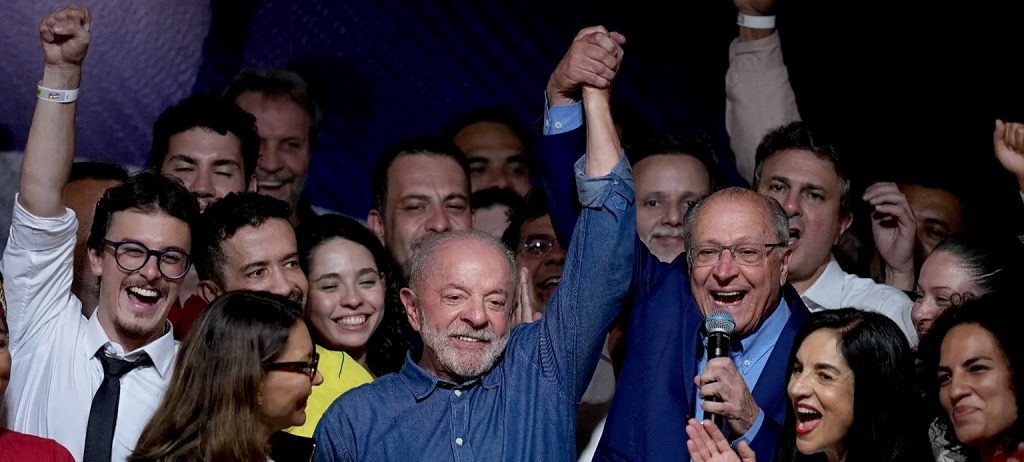
Photo courtesy of Euro News
In October 2022, Brazil delivered one of the most consequential electoral decisions in contemporary Latin American politics. Luiz Inácio Lula da Silva, the former metalworker, trade union leader and president who had governed Brazil between 2003 and 2010 returned to power after defeating the incumbent Jair Bolsonaro.
At 77, Lula became the first Brazilian president to win a third term. His victory was not simply a personal political comeback. It represented the rejection, by a narrow majority, of a particular political project that had brought together economic liberalism, religious conservatism, nationalist rhetoric and an increasingly confrontational relationship with democratic institutions. The result was extraordinarily close. Lula secured 60,345,999 votes, representing 50.90 percent of valid votes while Bolsonaro received 58,206,354, or 49.10 percent. The difference was just over two million votes. Yet the significance of the election becomes clearer when we examine the political forces behind the two candidates, the changing character of Brazilian society and the international networks that had invested considerable political capital in Bolsonaro’s continued presidency.
Lula’s return is remarkable because his political career had appeared to be over. Following his two successful presidential terms, he was implicated in the massive corruption investigations surrounding the Petrobras scandal. He was imprisoned in 2018 and his political reputation suffered considerable damage. However, in 2021, Brazil’s Supreme Federal Court annulled his convictions on jurisdictional grounds, restoring his political rights. This did not amount to a judicial declaration that every allegation against him was false but it enabled him to contest the presidency again.
His electoral performance also deserves closer examination. Lula received 57.26 million votes in the first round on October 2, 2022. In the second round he increased this to 60.35 million. Bolsonaro, meanwhile, rose from 51.07 million to 58.21 million. Both candidates gained votes but Lula managed to maintain a narrow lead. Why did Lula gain additional support? The answer lies partly in the political alliances he constructed. His decision to select Geraldo Alckmin, a former centre right governor of São Paulo and Lula’s former political opponent as his running mate was particularly important. It reassured sections of the business community and moderate voters who were uncomfortable with the Workers’ Party. Lula also received support from Simone Tebet, who had finished third in the first round. His campaign consequently became a broader democratic coalition rather than simply a mobilisation of traditional left wing supporters. The election was therefore not a straightforward victory for socialism. It was a coalition against Bolsonaro, bringing together left wing voters, centre left groups, moderate conservatives, environmentalists and sections of the middle class.
One of the most striking features of the campaign was the international support Bolsonaro received from the US and European right. Donald Trump publicly endorsed Bolsonaro in September 2022, describing him as a wonderful man and offering his complete support. Donald Trump Jr., Republican figures and other conservative political personalities also participated in the campaign of international endorsement. This was not an accidental association. Bolsonaro and Trump shared a political language built around nationalism, religious conservatism, hostility towards established media institutions and suspicion of progressive political movements. Bolsonaro had also supported Trump’s claims about electoral fraud following the 2020 American election. Their relationship reflected the development of an international right wing political network. The endorsement was intended to strengthen Bolsonaro’s image as the defender of conservative values against what his supporters described as the advance of socialism and communism in Latin America. Yet it also created an interesting political dilemma. Brazil is a country with a strong tradition of defending its national sovereignty and an international identity that extends beyond its relationship with Washington. For some voters, foreign political intervention could reinforce the impression that the election was about Brazil’s independence as much as its domestic political future. The support from Trump did not necessarily translate into additional votes. Indeed, Lula’s victory demonstrated that US conservative endorsement could not determine the outcome of a Brazilian election.
Environmental policy was another major dividing line between the candidates. The Amazon rainforest is not simply a Brazilian environmental resource; it is one of the world’s most important ecological systems influencing rainfall patterns, biodiversity and global climate regulation. During Bolsonaro’s presidency, environmental enforcement weakened and deforestation increased. According to data from Brazil’s National Institute for Space Research (INPE), annual deforestation in the Legal Amazon rose from approximately 7,536 square kilometres in 2018 to 13,038 square kilometres in 2021. This represented a substantial increase during his administration. Bolsonaro’s political relationship with agribusiness, mining interests and rural landowners was central to this debate. His government frequently argued that environmental restrictions prevented economic development and limited the rights of agricultural producers. His administration was criticised for weakening environmental institutions and reducing the effectiveness of enforcement against illegal logging and land clearance.
Lula offered a different approach. During his first two presidential terms deforestation in the Amazon fell substantially, particularly after the introduction of stronger monitoring and enforcement measures under the leadership of Environment Minister Marina Silva. The reduction was not solely the result of Lula’s personal commitment; it involved institutional reform, satellite monitoring, protected areas and cooperation with environmental organisations. Lula’s return therefore raised expectations that Brazil would once again assume a leadership role in international climate negotiations. His government promised to strengthen environmental protection, combat illegal deforestation and restore Brazil’s international environmental credibility. However, the conflict between conservation and economic development remains unresolved. Brazil’s agricultural exports are important to its economy and the interests of powerful rural constituencies cannot simply be ignored. Lula’s environmental programme must therefore be understood as an attempt to reconcile economic development with ecological responsibility.
Perhaps Lula’s most enduring political strength is his association with the economic advancement of poorer Brazilians. His personal biography is important here. Born into poverty in northeastern Brazil, he experienced migration, insecure employment and the difficulties faced by working class families. During his earlier presidency, programmes such as Bolsa Família provided conditional cash transfers to low income households. Families received financial assistance linked to conditions such as children’s school attendance and vaccination. These policies helped reduce extreme poverty and strengthened Lula’s political connection with poorer communities. For many Brazilians the memory of improved living standards during his earlier administrations remained powerful. Access to food, education, employment and basic social protection became central themes in his political appeal.
However, social protection comes with economic responsibilities. Brazil has faced slow productivity growth, high public expenditure, fiscal pressures and concerns about public debt. Governments must finance social programmes while maintaining investor confidence and economic stability. Lula’s challenge is to protect the poor without allowing public expenditure and debt dynamics to undermine long term economic stability.
The Brazilian election also demonstrated how social media had become an important political battleground. Bolsonaro’s supporters were highly active on Facebook, WhatsApp, Telegram and other digital platforms. The campaign frequently involved the circulation of misleading information about Lula, the electoral system and the country’s institutions. Some messages portrayed Lula as a threat to Christianity while others questioned the reliability of electronic voting machines. Religious imagery and accusations of corruption became central features of online political communication. Lula’s campaign and its supporters also used digital communication to challenge these narratives and mobilise voters. The Brazilian electoral authorities, particularly the Superior Electoral Court, played an important role in addressing disinformation and defending the credibility of the electoral process.
Perhaps the most fascinating dimension of the election was the role of religion. Brazil remains the world’s largest Catholic country by population but evangelical Christianity has grown rapidly over recent decades. Evangelical churches have developed powerful networks through television, radio, social media and local congregations. Bolsonaro successfully appealed to many evangelical voters through his emphasis on traditional family values, religious identity and opposition to progressive social policies. His political language frequently drew upon Christian symbolism. He presented himself as a defender of Christianity against what he portrayed as a secular and left wing political establishment. His relationship with evangelical leaders was particularly significant. Some influential pastors publicly supported him, and sections of the evangelical political movement became closely associated with his presidency.
Lula, however, retained important support among Catholic voters, particularly those influenced by the Catholic Church’s historic engagement with poverty, workers’ rights and social justice. During the period of military dictatorship, sections of the Brazilian Catholic Church supported human rights organisations and grassroots communities. Liberation Theology, despite internal disagreements within the Church, helped create an intellectual and moral connection between Catholic social teaching and movements for economic justice. This history is relevant because Lula’s political origins were closely connected to labour movements and grassroots organisations that developed within this wider social environment.
Nevertheless, it would be misleading to suggest that all Catholics voted for Lula or all evangelicals supported Bolsonaro. Religious identity did not automatically determine political preference. Research published in 2025 in the Brazilian Journal of Political Science found that religious leaders from both Catholic and evangelical communities could influence the voting behaviour of their followers. The election was therefore not simply a confrontation between Catholicism and evangelical Christianity. It was a struggle over who could claim the moral authority of Christianity in a deeply unequal society.
Lula’s return to the presidency was a remarkable political achievement. At 77, he defeated an incumbent president, overcame the political damage caused by corruption scandals and assembled a broad coalition that crossed traditional ideological boundaries. Lula’s return was therefore not merely the triumph of an individual politician; it was a reminder that, even in an age of powerful international political networks and digital propaganda, the material experiences and democratic choices of ordinary citizens remain central to the direction of a nation.