

Photo courtesy of Love London Love Culture
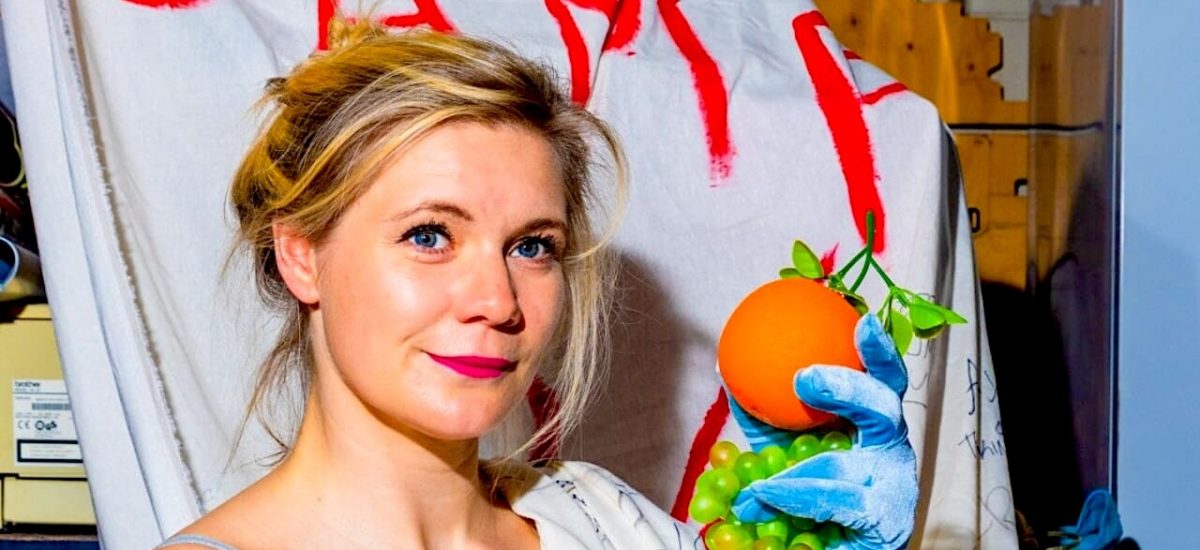
In her mid 20s, Norwegian actor, director and playwright Karen Houge was headed to clown school in Paris. But on the way she encountered a major distraction that took her on a different journey altogether – following the lives of Syrian refugees that has formed the basis for the rest of her life’s work, which combines performance, storytelling, play and physical theatre exploring contemporary social issues through humour, theatre and unconventional storytelling.
She travelled to Greece to make short videos documenting refugee arrivals. What began as a four week project on the beaches soon turned into a 10 day journey across Europe with seven Syrian men travelling to Germany. This experience would go on to shape her approach to storytelling.
Returning from this journey, Houge began training in physical theatre under Philippe Gaulier in France. It was here that she developed an approach that would later become central to Dreamgirl: using humour and playfulness to talk about difficult subjects. For Houge, comedy is not about making light of suffering; it is about finding a way to get people to listen. In Dreamgirl, she brings together live performance, documentary footage and photographs from her journey, keeping the real people and experiences at the heart of the show.
She uses comedy to tell stories that are often difficult to hear. Through her solo performance she invites audiences to look beyond familiar narratives about refugees, question how the West tells stories about displacement and recognise the humanity behind every journey.
Before taking Dreamgirl to international stages, Houge worked as a documentary filmmaker. But after repeatedly screening her films to audiences who already shared her views, she began looking for ways to reach people beyond those familiar circles. Since its first performances, Dreamgirl has travelled to stages across Europe, Australia, India and Pakistan with more than 70 performances so far. The show takes a closer look at how Western societies talk about refugees. Houge questions the tendency to place Western countries and institutions at the centre of these stories, often casting themselves as the ones who save others.
Karen spoke to Groundviews on what motivated to start the project, the response to Dreamgirl across continents and what impact she hopes her performance will make on audiences.
What prompted you to follow and document the journeys of refugees arriving in Greece?
I come from a documentary filmmaking background and had made a few films before this. But I often screened them at documentary festivals where most of the audience were already left leaning and agreed with what I was trying to say. While that was encouraging, I started wondering whether I was actually reaching anyone beyond that audience. So I decided to go to Greece and make short YouTube videos of refugees arriving on the beaches. This was 11 years ago before short videos became as popular as they are today on Instagram and TikTok. I realised that someone who doesn’t usually follow refugee issues might not sit down to watch a one hour documentary about something that happened a year ago but they might watch a one minute video filmed yesterday. After spending four weeks on the beach where refugees were arriving, I wanted to see if I could follow them for a day. I met a group of seven Syrian men and asked if I could follow them for a day. We connected well and they invited me to join them all the way to Germany.
How did travelling with these men across Europe shape your perspective?
As a white, blonde Norwegian woman, travelling through Europe is very easy for me. People are generally welcoming and I don’t have to think twice about crossing borders or moving around. But when I travelled with these men, I saw how frightened people were of refugees and how differently they were treated at borders and in public spaces. It made me realise just how different the experience of arriving in Europe can be depending on who you are.
How do you use humour and playfulness to navigate sensitive topics like displacement and human vulnerability?
At theatre school my teacher, Philippe Gaulier, who was born during the Second World War and mentored performers like Sacha Baron Cohen, constantly encouraged us to use comedy when dealing with difficult subjects. When people laugh, they let their guard down. They become more open to hearing things they might otherwise find uncomfortable. If you approach a serious subject only in a serious way, people can sometimes switch off and disengage. They might feel overwhelmed or think they’ve heard it all before. If you make them laugh, it’s more powerful. Humour allows you to tell a truth that cannot always be stated directly.
How do you make sure the show moves beyond superficial understanding to foster genuine empathy for refugees?
It’s about reminding people that we are all human. I want the audience to see the humanity, knowledge and resourcefulness of the people arriving in Europe rather than just seeing them as refugees or numbers in the news. In the show I perform as myself. I’m not playing anyone else or trying to speak on behalf of the people I met. I also use real videos and photographs from the journey. That way, the audience gets to see the actual people behind the stories. It makes the experience much more personal.
Having performed the show in different countries, how have audiences responded?
The response has been overwhelmingly positive. We’ve performed the show more than 70 times across three continents and it’s been interesting to see how differently people respond depending on where they are. Audiences in Pakistan, for example, connected with different parts of the show than audiences in Norway. Even within Norway, second generation refugees often relate to different things compared to older Norwegian theatre audiences. What I find particularly lovely is that people sometimes contact me days after watching the show to tell me they’re still thinking about it. And quite often, complete strangers end up having conversations and sharing drinks after the performance. I think that’s really special.
How does the show challenge Western ways of telling stories about conflict and displacement?
The show is quite critical of Western society. Because I’m Western myself, I feel I can be quite direct in questioning Western attitudes. Historically, Western societies have been the ones telling these stories, often placing themselves in the role of the hero. But this is not our hero story. It’s the story of the people who are making these journeys. I think that shift in perspective really resonated with audiences in places like India and Pakistan. It challenges the idea that the West should always be at the centre of someone else’s story.
How has performing and developing Dreamgirl over the past few years changed your perspective and the performance itself?
Performing the show more than 70 times in different parts of the world has taught me a lot. The performance has become much tighter, both visually and structurally, simply because I’ve had so many opportunities to work on it. I’ve also learned to pay closer attention to audiences. I notice what they respond to, what makes them laugh and which parts they connect with. Sometimes that tells me where I need to slow down and spend a little more time. The world around us is also constantly changing so the show has to change with it. In the less than two years since I first wrote it, three more wars have broken out that I’ve had to account for in the script. Touring has also changed the way I see the world. Travelling from Norway to Pakistan, India, Australia and the UK and meeting people from such different backgrounds, has shown me how the same story can mean different things to different people. It’s also reminded me how a performance can bring complete strangers together and get them talking.
What do you hope younger audiences take away from attending the performance?
I want to inspire young people to be genuinely curious about individuals from backgrounds different from their own and to feel that they can play an active role in shaping the society they live in. Some political leaders build their influence by making people afraid of those who are different from them. That fear makes people retreat into their own familiar groups. But I believe that a warm, welcoming and inclusive society is something we build together. It doesn’t come simply from rules or policies. It comes from how we treat one another. I hope students leave the performance wanting to connect with people beyond their own circles and learn about parts of the world they might not otherwise encounter.
Karen will have an evening performance of Dreamgirl on November 20 at Namel Malini Punchi Theatre followed by a discussion session, a physical theatre and clowning workshop from November 17 to 19 and a student matinee performance on November 20 for students, school groups and emerging practitioners. Dreamgirl is brought to Colombo by Absurd Dreams founded by Dinuli Mendis, a Sri Lankan creative entrepreneur.