
Photo courtesy of LA Times
Today is World Children’s Day
World Children’s Day is UNICEF’s global day of action for children, by children. Around the world, children are speaking up about their lives, their rights and the future they want. All children have a right to be heard and to be involved in the decisions that affect them. The choices being made today as conflicts, climate shocks and inequality mount will shape the future for every child. AI can open new possibilities. But children’s rights should never be an afterthought.
Marking the 37th anniversary of the UN Convention on the Rights of the Child, this year’s theme is, “My day. My rights. My future”. Its purpose is to amplify children’s voices, protect their rights and address issues like education, health and climate change. Sri Lanka observed its National Children’s Day and National Week for World Children’s Day in October with the theme, “Mentally Strong, Children Empowered”.
“There can be no keener revelation of a society’s soul than the way in which it treats its children.” These words, spoken by Nelson Mandela, grow more urgent with every passing year. World Children’s Day is meant to be joyful with school programmes, gifts, songs and laughter. But behind the celebration sits an uncomfortable question: are we giving children the world they deserve? In this article, we will first look at what childhood looks like across the world today, both the progress and the pain. Then we will examine where children are treated unfairly through real examples from war zones and from ordinary homes. Finally, we will discuss what governments, communities and each one of us should do to change this.
In many ways, this is the best time in history to be born. Far fewer children die before their fifth birthday than a few decades ago, vaccines protect millions and more girls and boys sit in classrooms than ever before. In 1989, the UN adopted the Convention on the Rights of the Child, which has since become the most widely ratified human rights treaty in history. It promises every child the right to life, health, education, protection and a voice in matters that affect them. Yet a promise on paper and a reality on the ground are very different things. UNICEF estimates that roughly one in six children in the world, close to 470 million, lives in or near a conflict zone. The International Labour Organisation estimates that around 138 million children are still in child labour, working in fields, mines and workshops when they should be learning. Millions more face hunger, extreme poverty, climate disasters and displacement. The world is richer than it has ever been yet a child’s chances in life still depend heavily on the place and family they happen to be born into. That is the first sign that something is wrong.
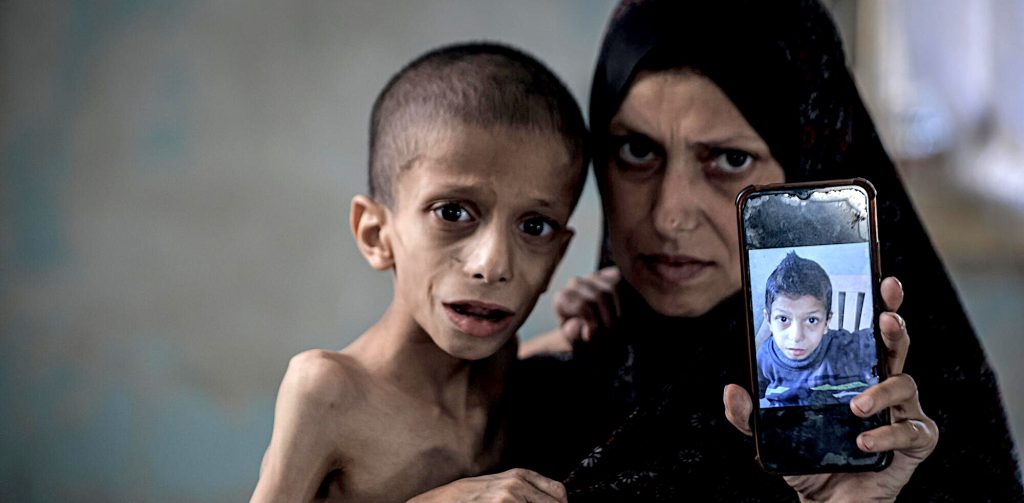
This brings us to unfairness. Unfairness means suffering that a person did nothing to earn and cannot control. No child chooses a war yet children pay for wars more heavily than almost anyone. In Gaza, Save the Children reported that at least one Palestinian child has been killed every hour on average by Israeli forces over nearly 23 months of war with the number of children killed now surpassing 20,000. Thousands more have been injured losing parents, homes, schools and access to food and medicine. Gaza has become the place with the largest number of child amputees in modern history.
In Sudan, one of the largest displacement crises in the world has forced millions of children from their homes with repeated warnings of famine and of hospitals and schools being destroyed. In Ukraine, the UN has documented children killed and injured, schools damaged and children separated from their families and taken across borders. Similar stories continue in Myanmar, Yemen, Haiti and the Democratic Republic of the Congo. War steals in quieter ways too: a child who misses years of school rarely catches up and one who watches violence carries that fear for life.
But danger is not found only on battlefields. The World Health Organisation estimates that up to one billion children aged two to seventeen experience physical, sexual or emotional violence or neglect every year. Much of it happens inside the home, the very place a child should feel safest. Domestic violence, harsh punishment and abuse survive because of silence: children have little power to speak and adults often prefer not to see. Girls face particular risks. Around 12 million girls are married before the age of eighteen each year, which ends their education, endangers their health and traps them in cycles of poverty. Children with disabilities, children in refugee camps and children on the streets are hardest hit of all because nobody is counting them or listening to them. Behind every statistic is a child with a name, a favourite game and a dream that deserved a chance.
So how should children be treated? At the very least, exactly as the UN Convention describes – as people with rights, not as property, cheap labour or collateral damage. Governments must protect children in war, a duty already written into international humanitarian law, and hold accountable those who attack schools, hospitals, and homes. They must invest in free, quality education and healthcare, strictly enforce laws against child labour and child marriage and build child protection systems that actually work with trained social workers, safe helplines and swift action when abuse is reported.
Communities carry responsibility too. Violence at home must never again be dismissed as a private family matter. Teachers, doctors and neighbours should learn to recognise warning signs and know where to report them. Schools should be places where a child can speak without fear. Ordinary people can act by supporting organisations such as UNICEF and Save the Children, by refusing to buy from industries that exploit child workers and by never using violence as discipline. Parents can show that firmness and love are not opposites. Above all, we must stop talking about children and start listening to them. Young people understand bullying, online dangers, inequality and climate change from the inside and they deserve a seat at the table where decisions about their future are made.
World Children’s Day should not be one day of celebration followed by 364 days of neglect. A child asks for very little: food, safety, love, a school and someone who listens. Mandela’s words remind us that a society reveals its soul by how it treats those who cannot defend themselves. If we want a fairer and more peaceful world tomorrow, we must begin by protecting its smallest citizens today.