
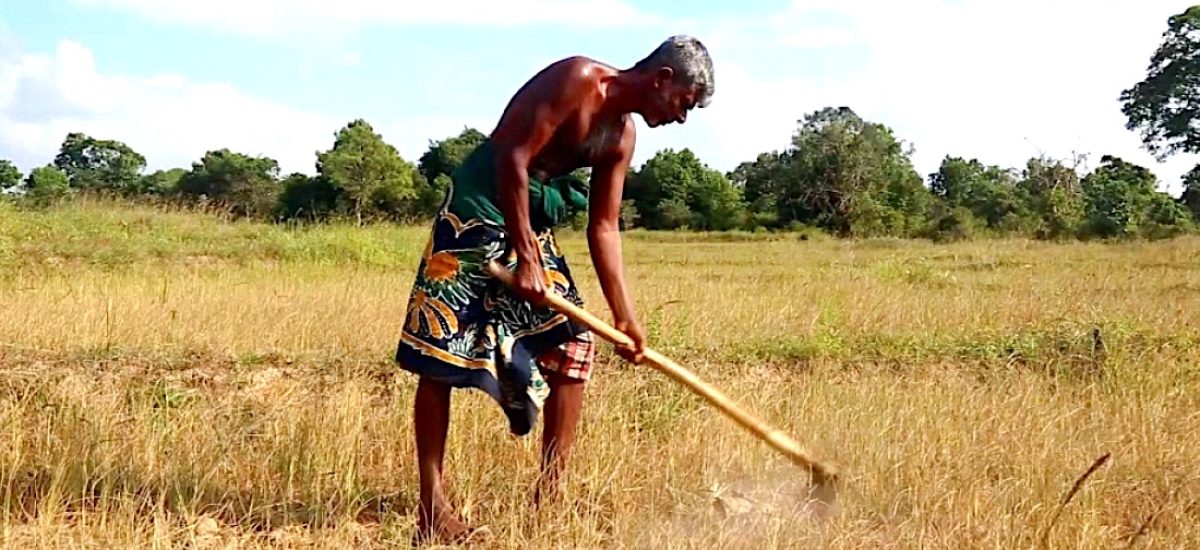

Photo courtesy of Al Jazeera
As the island braces for the latter half of the year, a familiar, unwelcome visitor is stirring in the Pacific Ocean. Meteorologists have all but confirmed the onset of a powerful El Niño Southern Oscillation (ENSO) event, a climatic shift that historically leaves a trail of parched fields, empty reservoirs and economic turmoil across Sri Lanka. Yet, unlike previous encounters, the nation faces this threat at a time of profound economic fragility. This is not just a weather story; it is a looming macroeconomic shock that threatens to reverse the hard-won stabilisation gains of the post-crisis era.
The consensus among experts across the fields of agriculture, energy, water management and public health is sobering: while we cannot stop the rains from failing, we can prevent a weather event from becoming a self-inflicted humanitarian and fiscal disaster. The solutions exist but they require a radical shift from reactive relief to proactive, intelligence-led management.
The cascading impact model
The primary mechanism of El Niño is the suppression of the vital Northeast Monsoon or Maha season. This single failure sets off a domino effect through the country.
The most immediate casualty will be the Maha paddy harvest, which accounts for roughly 65% of the nation’s annual rice supply. Dr. Anura Gamage, an agricultural economist attached to a Colombo-based think tank, explains the maths. “When you lose the Maha season, you aren’t just losing a food crop. You are evaporating the liquidity of the rural economy,” he says. “A failed harvest means the farmer cannot repay the agro-chemical loan, cannot buy school books, and cannot purchase consumer goods. This demand shock immediately travels to the towns.” Beyond paddy, the highland tea sector – a vital artery of foreign exchange – experiences leaf scorching and a deterioration of the complex biochemical profile that commands premium prices at the Colombo auction.
Sri Lanka’s grid relies on the Mahaweli reservoir complex (Victoria, Randenigala and Kotmale) for a significant share of its cheap electricity. El Niño’s impact on hydropower is a delayed but devastating one. The failure of the Maha rains does not cause a power cut tomorrow; it depletes the reservoirs months later during the dry Yala season of 2027. When the water runs low, the Ceylon Electricity Board (CEB) has no choice but to fire up expensive thermal oil and coal plants. “This immediately sends the CEB back to the Treasury begging for dollars,” warns a senior energy analyst who requested anonymity. “It blows a hole in the budget, forces emergency tariff hikes on industries already struggling with input costs and makes Sri Lankan exports uncompetitive. Water for food versus water for power becomes a zero sum game.”
While energy crises grab headlines, a quieter emergency unfolds in the villages. When piped water slows to a trickle and wells run dry, women and children are forced to trek to unprotected, stagnant sources. This triggers predictable but preventable outbreaks of diarrheal diseases and Hepatitis A. Simultaneously, the nutritional pipeline collapses. The combination of paddy failure and the destruction of home gardens creates a dual deficit of calories and micronutrients. “The face of this crisis will not just be a parched paddy field; it will be a child in the Moneragala clinic with acute wasting or a pregnant mother with severe anaemia,” explains Dr. Chamila Perera, a public health specialist. In coastal cities, the reduced flow of the Kelani and Kalu rivers allows saltwater to intrude upstream, threatening the municipal water intakes that serve Greater Colombo.
A policy playbook
The structural weakness in the response mechanism is that we wait for a harvest failure to import food and wait for a reservoir to run dry to beg for power. Experts are calling for a forecast-based financing model where funds and decisions are triggered by the weather forecast, not the ruin it leaves behind.
The most contentious political battle during a drought is the fight over the last drops in the Mahaweli. Power, irrigation and drinking water agencies all stake their claims. The cabinet must immediately issue a legally binding directive that defines dead storage levels in major reservoirs. Once that red line is hit, the hierarchy of use must lock into place: human consumption first, essential industry second, irrigation third and power generation last. This removes dangerous political discretion and establishes a transparent, non-negotiable survival order.
The traditional model of crop damage assessment is a relic. It requires a physical visit, a report, a recommendation and months of waiting – a delay that pushes farmers into debt traps. The Ministry of Finance, with support from multilateral development partners, should immediately activate a parametric insurance rider for smallholder farmers. This is a technology-driven solution: a satellite measures the rainfall. If the cumulative 30 day rainfall drops below an agreed index (say, 50mm), the pay out is triggered automatically. Funds land directly in the farmer’s bank account via a mobile wallet in 48 hours. It is not charity; it is a pre-funded, climate-linked liquidity bridge that requires zero physical assessment.
When the harvest fails, Sri Lanka rushes to the international market to buy rice, only to find that our regional neighbours are also facing tight supply, causing prices to spike. The State Trading Corporation must not wait. Using the current probabilistic forecasts, the government should sign option to purchase contracts with Vietnam, India and Pakistan now. We pay a minimal, non-refundable fee to secure the right to import a guaranteed quota of rice in January at a price capped today. It is a small insurance premium against regional hyperinflation.
In the dry zones of Jaffna, Hambantota and Moneragala, unregulated commercial boreholes are draining the deep aquifers. During a drought, this extraction accelerates unsustainably. A temporary presidential gazette must declare a moratorium on new commercial water extraction licenses for the duration of the El Niño alert. Protecting the deep groundwater lens from saline intrusion and exhaustion is a non-negotiable act of sovereign resource defence.
Immediate practical fixes
Policy provides the safety net but technical ingenuity on the ground prevents the fall. The window for mega infrastructure projects has closed; we cannot build dams before October. Instead, we must turn to virtual infrastructure and behavioural intelligence.
The Alternate Wetting and Drying (AWD) mission: Continuous flooding of paddy fields is our biggest water wastage. The Department of Agrarian Development must pivot to a war footing to promote AWD. This simple method involves installing a perforated tube in the field; farmers flood the field, let the water drop to a level below the soil surface and re-flood only when the tube indicates dryness. It saves 30% of water without losing yield. When paired with short duration, direct seeded rice varieties, it reduces the crop’s exposure window to the drought. Agricultural instructors must stop acting as desk officers and become field brigades in 100 identified hotspots immediately.
The concept of virtual reservoirs: Before we look for new water, we must find the water we have already lost. The National Water Supply and Drainage Board (NWSDB) has a Non-Revenue Water (NRW) rate of up to 35% in cities like Kandy. That water, lost through invisible underground leaks, has already been treated and pumped at great cost. A crash smart ball programme – sending acoustic sensors through the main transmission pipes of Greater Colombo – can precisely locate silent fissures. Fixing them is an instant, cheap source of clean water. It is a virtual reservoir hidden in our pipe network and it can be tapped in weeks, not years.
Saving power by shaping demand, not cutting it: The CEB’s traditional response to a hydro shortage is the blunt instrument of island wide load shedding, which destroys $100 in economic output for every $1 of electricity withheld. We need a scalpel, not a sledgehammer. The solution is soft load control: mandating Time of Use (ToU) smart meters for the top 1,000 industrial consumers. This allows the CEB to charge punitive rates during the 6.30 pm to 10.30 pm peak, forcing factories to voluntarily shift heavy operations to the non-peak daytime hours. Simultaneously, a crash priority installation of grid-scale Battery Energy Storage Systems (BESS) at existing solar parks is essential. This technology simply captures the cheap, abundant midday sun and releases it to the grid during the night peak, directly displacing expensive oil. It is the only way to balance a green grid without hydropower.
The revival of the ancient cascade system: In the dry zone, our ancestors survived climatic volatility not through mega dams but through a network of interconnected village tanks designed to recharge groundwater. Generations of neglect have silted these tanks. A proactive cash for work programme, launched before the crisis deepens, to de-silt small tanks and dig recharge wells in their beds is the ultimate defensive shield. Even a weak spell of rain rapidly infiltrates the shallow aquifer through a desilted bed, securing domestic wells for the long haul. This turns a relief programme into a climate adaptation asset.
Mobile water treatment for salinity invasion: Transporting heavy water bowsers from distant wet zones to parched coastal towns is a logistical and economic absurdity. The Navy’s Research and Development Unit, in partnership with the NWSDB, should pre-position containerized, solar-powered Reverse Osmosis (RO) units at strategic river mouths like Bentota and Kalutara. These shipping container units, running entirely on solar panels, can transform brackish, salty river water into 20,000 litres of drinking water daily. It’s a one time capital cost with near zero running expenses, offering a sovereign emergency capacity independent of fuel supply chains.
Protecting the most vulnerable
The final frontier of the crisis is the human body. The Ministry of Health’s Medical Officers of Health (MOH) network is the last line of defence. They must be armed with a digital syndromic surveillance system. Instead of compiling monthly reports, a simple mobile application should allow them to report real-time clusters of bloody diarrhoea or unusual fever. An algorithm triggers an alert to the Regional Director, enabling the pre-positioning of IV fluids and antibiotics before a disease outbreak spirals out of control. The school feeding programme must pivot to a take home ration model for pregnant mothers and children under five in the 25 most vulnerable Divisional Secretariats. Food must follow the vulnerable, not the classroom.
Sri Lanka stands at a crossroads. We can continue the old pattern of denial, panic and emergency procurements, a cycle that extracts a heavy toll on our fiscal sovereignty and human development. Or we can treat this impending El Niño as a live national security exercise. The difference between a manageable dry spell and a full blown catastrophe will not be measured in millimetres of rainfall. It will be measured by whether a farmer receives an automatic insurance pay out in his bank account in November, whether an industrialist voluntarily powers down his machinery at 6.30 pm to save the grid and whether a village tank is cleaned out before the last shower falls. The science is clear, the tools are available and the time to act is now, not after the wells run dry.