

Photo courtesy of Bristol Post
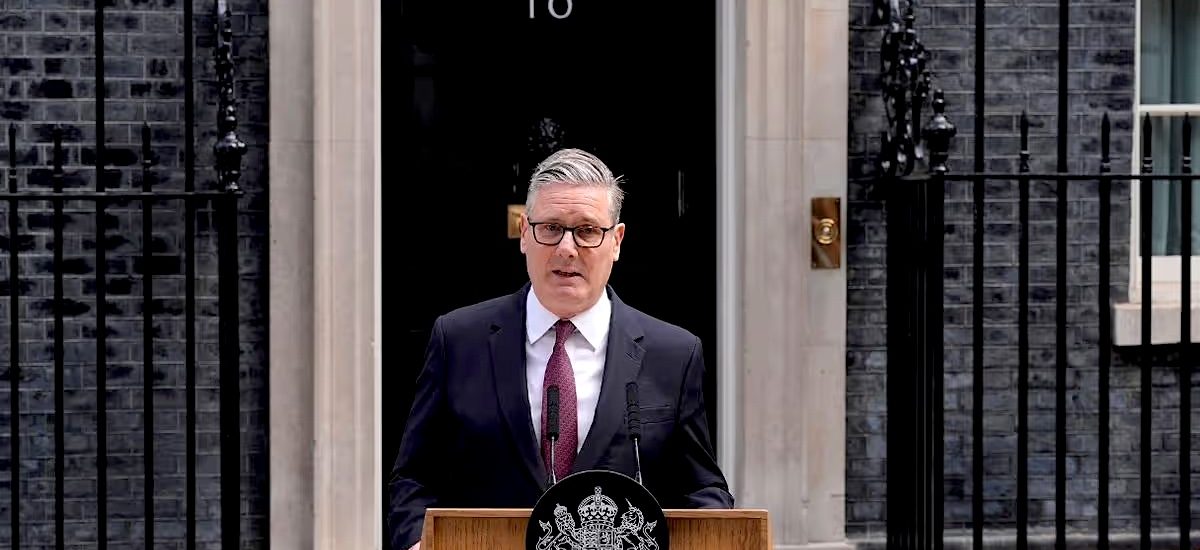
In June 2026, Keir Starmer announced that he would resign as UK prime minister, promising to “Do everything I can to ensure an orderly handover of power.” Less than two years earlier, he had led the Labour Party to a landslide victory in a general election. Each country’s situation is distinct yet there may be lessons for Sri Lanka and elsewhere with a left wing or centre left government that came to office with a promise of change.
He is being replaced by Andy Burnham, former mayor of Manchester, one of England’s main cities, who won support from enough MPs in the parliament to take over until the next general election. He is far more popular and has distanced himself from certain damaging policies. Yet there are already signs that he will make some of the same mistakes. If so, the ruling party may well lose many parliamentary seats and be voted out of office in the next few years and, more importantly, a far right party or alliance may take over with damaging consequences for most of the population and wider world.
When voters facing economic hardship and social exclusion vote in a new government that has pledged to improve their lives and make their country more just and less corrupt, ministers are almost certain to face huge pressure to maintain the status quo. A handful of people and corporations (in that country and beyond) if rich, powerful and determined enough can get in the way of progress; yet this may happen, in part, because they manage to refocus politicians’ energies on pleasing, or at least appeasing, them.
This may include promoting hostility and mistrust between different sections of the public, sometimes using social or mass media; flattery, bribery and other types of manipulation at senior level; and threats or sabotage. Even liberals and centrists opposed to far right policies may at first encourage politicians to abandon bold attempts to increase equity and protect the most marginalised. This shift may be portrayed as being sensible and practical.
Handling such pressures is not easy and some compromise may be necessary. Yet taken too far, this can end up alienating supporters while appearing to give credibility to views promoted by right wing rivals. So even in terms of winning elections, let alone creating a more just and compassionate society, failing to hold firm to principles and betraying people’s hopes often backfires.
Keir Starmer did not face the same level of pressure that leaders of poorer countries have tended to experience and his problems were largely self-created. Indeed one of the achievements he mentioned in his resignation speech, half a million children being lifted out of poverty, happened because his punishment of MPs seeking to remove a two child benefit cap failed to silence calls for change.
In addition there are different backgrounds. For instance, UK racism is largely a legacy of Britain’s imperial past and ongoing influence although the country is also now subordinate to the US and under threat from its president Donald Trump and Russian president Vladimir Putin. While, as in Sri Lanka, economic change and the erosion of a welfare state have harmed people on low incomes, the baseline is generally higher. UK politics is also more complicated in that it is made up of several nations with England by far the biggest and some functions in Scotland, Wales and Northern Ireland are devolved.
Nevertheless there are lessons for Sri Lanka amid protests from farmers across the country, people struggling with the cost of living, public service workers over working conditions and Northern and Eastern residents displaced by the armed forces. Those who win elections decisively because voters want a more fair and humane society can swiftly lose support if these feel betrayed. This jeopardises leaders’ chances of further political success and causes immediate harm to ordinary people and allows potentially lethal divisions to widen.
Voters wanting change
In recent decades, the UK parliament has been dominated by two parties, which have governed (sometimes in coalition with allies): Conservative, generally viewed as right wing and Labour as left wing. This is relative however; six decades ago, both broadly accepted a mainly capitalist economy, though with a welfare state enabling most people to access basics such as food, housing and healthcare as well as having a democratic say, at least during elections. Since then there has been a shift to the right, so that today’s Conservative leadership might be described as far right and the current Labour government as centre right although with some socially liberal or progressive policies such as greater protection for tenants.
The Conservatives lost power in 2024 amidst a cost of living crisis and overstretched public services hitting numerous voters, largely driven by austerity-based policies made worse by global problems on top of blatant corruption and incompetence. Some areas were socially and economically run-down and their residents felt abandoned by central government.
Ministers had tried to win support by whipping up nationalism and anti-minority feeling and bringing in policies targeting migrants, refugees and wider ethnic minorities, Muslims, disabled people and families on low incomes. Also civil liberties were eroded and there were pledges to withdraw from international agreements hindering abuse of state power, which were portrayed as getting in the way of empowering and protecting British people. But this had been unwise even in terms of self-interest, let alone morality. It had ended up boosting far right parties such as Reform UK by appearing to give credibility to their wilder claims. This got many protest votes from white British people despite its policies potentially making matters even worse for numerous supporters.
By this point, the Labour Party was led by Starmer. At one time a human rights lawyer, he had become the director of public prosecutions, being awarded a knighthood so that he became Sir Keir. He had taken over as leader with the promise of uniting different factions but had then led a sharp crackdown on the left, shifting the party away from challenging the interests of the rich and powerful too much and playing along with worsening racial prejudice. Nevertheless some centrist or centre left politicians had been appointed as shadow ministers and there were hopes that, once a Labour government was in power, life would become somewhat better for many of the people who had been struggling or felt undervalued.
In a general election in July 2024, Labour won a sizeable majority of seats in parliament, although only a little more than a third of votes, and Starmer became prime minister. There were many difficulties to confront, including a largely hostile mass media but his misjudgements made matters worse.
Early on, although ministers did not break the rules to further their own interests on anything like the previous scale, much of the public was unhappy about acceptance of personal gifts. Worse was to follow with various measures that hit people already struggling, followed by U-turns when it became clear how unpopular these were. Winter fuel payments to pensioners to help them stay warm during cold weather were slashed for most; many thousands were forced into poverty or ended up in hospital until the policy was reversed. Despite some positive developments during his time in office, as critics have pointed out, this pattern continued. Civil liberties, along with other aspects of human rights, were eroded further. This alienated many potential supporters, both those directly affected and others who cared about social justice, while playing into the hands of the far right.
Among his most serious failings was his strong practical support for a genocidal Israeli regime despite trying to distance himself from some of its most blatant illegality, due in part to pressure from parliamentary colleagues. As Palestinians faced massive violence, this led to complicity in serious violations of international humanitarian law. With regard to genocide in Sudan, his government sought to downplay this so as not to alienate potential business partners. At home and abroad, concern for the vulnerable and marginalised time and again took second place to siding with the wealthy and powerful. An abysmal result at local elections was unsurprising.
Learning lessons
His successor Andy Burnham has apologised for Labour Party leaders’ actions on Gaza and, more generally, tried to win back some of the lost goodwill among former party supporters although still opting for racist immigration policies. He has an opportunity to achieve major economic and social shifts.
Yet there are already indications that he may shy away from bold measures that benefit people on the margins or under attack in the UK and beyond. If so the human, and ultimately political, cost will be high.
Elsewhere in the world, including in Sri Lanka, there are lessons to be learned. A new government may sweep in with promises of change, only then to face incentives, persuasion, pressure and threats, at a personal and collective level, which may push it off course. This may appear sensible in appeasing powerful overseas partners and winning popular support here and there by favouring a majority over their minority neighbours or currying favour with influential public figures or community leaders while failing to address pressing financial and social needs.
Governing is not easy and compromise cannot always be avoided. Yet repeatedly failing to do what has been promised can squander goodwill very fast. Truly progressive governments may need to trust ordinary people sometimes, be transparent about choices and willing to take risks on matters of principle to achieve justice for all. Otherwise an apparently huge majority may not be enough to fend off disaster.