

Photo courtesy of ABC45News
Young people from France to Brazil to India are taking to the streets under slogans that sound like jokes. Yet beneath the humor lies a deeper frustration: they are not rejecting democracy but protesting a system that seems increasingly indifferent to their voices, concerns and demands.
A joke that became a password
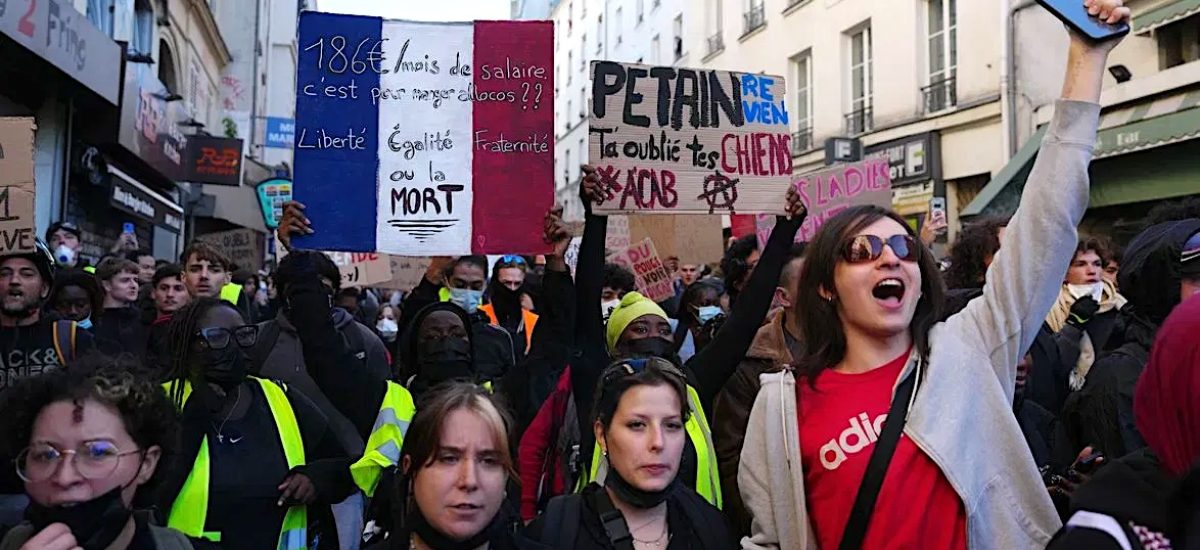
Bismillah, c’est les ténèbres means In the name of God, it is the darkness. It makes very little sense and that is exactly why it spread. The phrase comes from a Snapchat message that French students believe an undercover police officer wrote while trying to join their protest groups. The clumsy mix of an Arabic religious phrase and street slang gave the sender away. Students turned the blunder into a joke and the joke into a password. Within weeks it was on cardboard placards outside blockaded schools, shared tens of thousands of times in parody videos and repeated even by Greta Thunberg. Neither the police nor the interior ministry has commented on the screenshots and no one has independently verified who sent them. What sounds like a joke has now become a point of indictment of racial stereotyping in policing and of authorities who seem to have little understanding of the lives young people lead.
But the joke is only the doorway. The movement began on September 18 in Créteil near Paris and spread as high school students blockaded schools over funding and conditions. On October 17, trade unions and former yellow vest protesters joined them over the rising cost of living. The interior ministry counted about 550,000 people on the streets that day while organisers claimed about 800,000. The day ended with tear gas, looting, fires and around 400 arrests. In the weeks before it, France had already seen thousands of arrests and hundreds of injuries. Yet the protests continue to grow, raising a question that arrests and force alone cannot answer: what is driving so many young people onto the streets?
It is not only France
The slogan has crossed into Belgium and Italy where protests over living costs and education have also taken place. Other countries have their own chants and their own causes but the same generation is on the street.
In Brazil, thousands of students marched through Rio de Janeiro on October 7 shouting “Never Again Bolsonaro”. Flávio Bolsonaro, son of former president Jair Bolsonaro, finished first in the opening round with 47 percent against President Luiz Inácio Lula da Silva’s 45 per cent and the two met in a runoff on October 25, which President Lula won. Bolsonaro’s father is serving a 27 year sentence for attempting a coup. Students spoke of fear for minority rights and for university funding. “We’re fighting for Brazil, not for Lula,” one 19 year-old told the Associated Press, a reminder that this protest is about the outcome of an election, not about removing a government.
In India, a youth movement began as an internet joke. In mid-May the Chief Justice Surya Kant was reported to have compared unemployed young people to cockroaches during a court hearing. He later said he had been misquoted and was speaking about people with fake degrees. The next day, Abhijeet Dipke, a former political campaign strategist, launched the Cockroach Janta Party, a satirical name that echoes the ruling BJP. Within 48 hours it had millions of followers online. Its target is now far more serious: a nationwide revision of the voter lists, which critics say has removed millions of eligible voters and which protesters allege favours the BJP. The Election Commission and the government reject that charge. Delhi police have detained thousands of protesters and party leaders were detained twice within days.
In Spain, the spark was one person. On September 23, 87 year-old Maricarmen Abascal was evicted from the Madrid flat where she had lived for decades after the property’s owner sharply raised the rent. She died on October 7, two weeks later. Protesters camped in Madrid’s Puerta del Sol under the slogan Not one more Maricarmen. Parliament rejected two government housing decrees, Prime Minister Pedro Sánchez called an early election for November 29 and the main unions have called a general strike for November 11. This is not a purely youth movement but it grows from the same root: housing that ordinary people cannot afford.
Why slogans, jokes and costumes?
This is no accident. The researcher El Chazli has observed that youth protest draws heavily on young people’s own subcultures and that satirical memes and online trends have become a way to voice political anger. There are practical reasons too. A joke is easy to share, easy to join and hard to ban. It lets a teenager take part without writing a manifesto. It can turn an insult into a badge as the Indian cockroaches did and a police mistake into a punchline as French students did.
Humour also has limits. A slogan can open a door but it is not a programme. The Indian movement shows both sides. It can point to a result, since the Education Minister resigned after months of protest over a leak of national exam papers, a resignation the movement claims as a victory. But it now faces a harder fight over election rules where there is no single person to remove.
Has democracy failed?
The easy answer is yes. The more accurate answer is that something narrower has failed.
France is not an authoritarian state. Its government is elected, its courts work and President Emmanuel Macron has said there is a constitutional right to protest while calling violence unacceptable. Yet the government has little room to give way. Its proposed 2027 budget includes a €54 billion package of cost cutting and tax measures that it says is needed to reduce the deficit while protesters want more money for schools and relief from higher prices. Emile Chabal, a historian at the University of Edinburgh, told Al Jazeera that these are several protests happening at once, joined by shared grievances: underfunded education, rising living costs and for students uncertain prospects after graduation. A presidential election is due in spring 2027.
That is the pattern worth noticing. Elections give citizens a say every few years. But a rent increase, a school without enough teachers or a fuel bill arrives every month. When a government cannot or will not respond between elections, protest fills the gap.
In India the gap is more basic still because the dispute is over the voter list itself, the thing every election depends on. The claims of manipulation are contested and denied by the Election Commission but reports that the commissioner’s own deputies raised concerns repeatedly have kept the issue alive. In Brazil the fear was of a different kind: that a political family linked to an attempted coup and to the storming of government buildings in 2023 could return through the ballot box.
So democracy has not failed in the same way everywhere. In one place the failure is affordability, in another trust in elections, in another the defence of the democratic order itself. What these protests do not show is young people rejecting democracy. Most of them are asking for more of it.
What do young people want from the state?
Across these very different protests, three demands keep returning. The first is a fair share of public resources: schools that work, homes that can be afforded and jobs that exist. The second is honest and open institutions: clean voter rolls and answers from commissions, ministers and courts. The third is equal treatment: not being stereotyped by the police and not being treated as a security threat for taking part in a protest. These protests are not merely reactions to immediate injustices; they expose the deeper structures of political exploitation and systematic discrimination.
How states respond to these demands is itself a test. In Delhi, the police removed the protest site status of Jantar Mantar, a historic protest venue, and detained leaders who jumped the barricades. In France, the government has said it understands students’ concerns but has accused political groups of exploiting them. Governments are right to stop looting and arson. The question is whether they also answer what is being asked. A state that responds to a protest only with policing risks confirming the very complaint that brought people out.
Sri Lanka has seen this before
Sri Lankans do not need to look far for a comparison. In 2022, a protest movement born in fuel queues and power cuts forced a president out of office. It showed that the street can remove a leader. It showed less clearly that the street can rebuild institutions. Elsewhere, young protesters brought down the government in Nepal in 2025 while many other movements have faded without lasting change. Many Sri Lankans saw the 2024 elections as the same anger finding a formal outlet, which suggests that protest and voting are not rivals. They are two ways of demanding the same thing.
The question that remains
The slogans will fade; the grievances will not. A generation that is dismissed as a mob or a meme still faces rents it cannot pay, schools short of money and election rolls it does not trust. One thing, however, remains undeniable: Gen Z, at the forefront of this unrest, is not taking to the streets for clout or recognition; these protests are fueled by frustration with injustice, disillusionment with political leadership and an exhaustion born of waiting for states to deliver the change they have long promised. The test of a democracy is not whether it can hold elections but whether it can hear people between them. Young people on the streets are not asking for democracy to be replaced; they are asking it to answer. For when those in power refuse to listen, the streets become the place where their voices can no longer be ignored.