
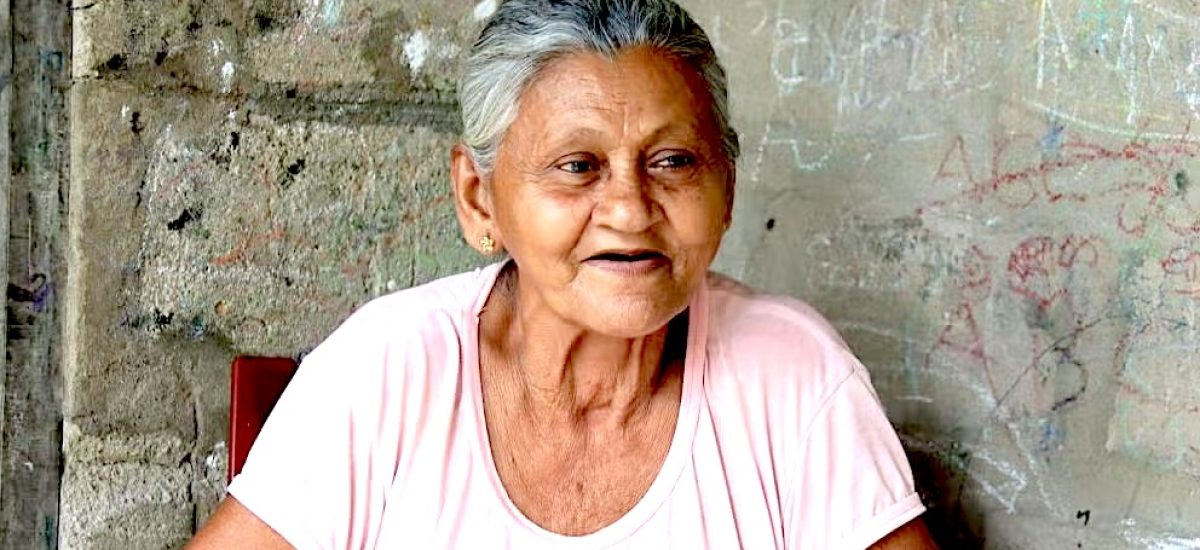

Photo courtesy of UNFPA
Today is International Day of Older Persons
“When an old person dies, a library burns.” This African proverb explains why elders matter so deeply. Every older person carries decades of memory, wisdom, skill and love that no book can fully replace. Elders’ Day, marked by the UN as the International Day of Older Persons, is a chance to honour them. But honouring them with flowers for one day is not enough. The world’s population is ageing at a time when older people face injustice in peace, crisis and war. They deserve to be treated better, giving them the dignity they have earned.
The world is getting older; about one billion people are 60 or above and the UN expects that number to more than double to over two billion by 2050. This is a triumph of medicine, nutrition and public health because people are living longer than any generation before them. But it also brings new challenges. Families are becoming smaller, young people migrate to cities and other countries for work and the traditional systems in which children cared for parents are weakening. Some older people live surrounded by family and respect while others live alone, poor or forgotten. Many governments have not yet planned for what an ageing society needs: pensions, healthcare, safe housing and social connection.
The UN has recognised this in stages. In 1991, it adopted the Principles for Older Persons, built around independence, participation, care, self-fulfillment and dignity. In 2021, it launched the Decade of Healthy Ageing, a 10 year global effort to improve older people’s lives. Yet unlike children, who have a legally binding UN convention, older people still do not. Campaigners have argued for years that this leaves a serious gap in protection and in 2025 the UN Human Rights Council took a step towards drafting such a treaty. It is progress but it comes late.
That gap matters because unfairness towards elders is often invisible. Ageism, meaning prejudice or discrimination against people because of their age, is widespread. It treats older people as burdens instead of citizens and it quietly shapes hiring, healthcare and public attitudes. Worse, the WHO estimates that about one in six older people experiences some form of abuse in community settings whether physical, emotional, financial or through neglect. Most of it happens at home at the hands of people they trust and much of it is never reported because victims feel shame, fear or dependence.
Crises expose this vulnerability sharply. During the 2003 heatwave in Europe, tens of thousands of people died and a large share were elderly people living alone whom nobody checked on. During the COVID-19 pandemic, older people accounted for a huge proportion of deaths and many in care homes were cut off from their families for months, dying without a familiar hand to hold. In wars, elders are often the last to leave and the least able to flee. Humanitarian agencies have reported older people in Gaza, Ukraine and Sudan trapped in besieged or shelled areas without medicine, mobility aids or safe shelter, unable to reach aid points and sometimes left behind when families are forced to run.
Poverty adds another layer. In many countries, pensions are tiny or nonexistent, forcing people to work into frail old age or depend entirely on relatives who may themselves be struggling.
So how should elders be treated? First, with basic dignity: as full citizens with rights, experience and voices, not as a problem to be managed. Governments should guarantee decent pensions, affordable healthcare and accessible housing and transport. Emergency plans for war, floods and pandemics must include older people from the start with evacuation routes they can actually use and supplies of essential medicines. Laws must punish elder abuse and reporting systems must be simple, safe and trusted. Communities have a role too, because loneliness is one of the greatest threats to older people’s health. Something as simple as a regular visit, a phone call or a shared meal can change someone’s life. Families should include elders in decisions rather than making choices over their heads and workplaces should value experience rather than pushing people out. Schools can connect generations by inviting grandparents to share stories, which enriches young and old alike. Being old does not mean being useless; elders are teachers, caregivers, storytellers and keepers of tradition.
Every one of us, if fortunate, will become an elder one day. That simple truth should guide how we treat older people today – the way we hope to be treated ourselves. Elders’ Day underscores that respect is not a favour but a debt because we stand on foundations they built. If we let their voices fade, we lose more than individuals; we lose the library of a whole generation. Let us listen while the books are still open.