

Photo courtesy of Gavi
Across South Asia, Sri Lanka is the example people in the public health sector reach for whenever someone says that safe childbirth is something only rich countries can afford. I am writing this from India. To an obstetrician from a part of South Asia that is still catching up, I believe this record deserves to be defended when money is short.
The World Health Organization’s country office reports that Sri Lanka had reduced maternal mortality to 25 deaths per 100,000 live births in 2023. The UN Population Fund notes that about 99 percent of women give birth in health facilities with medical staff.
India’s latest official figure from the Sample Registration System for 2022-24 is 87 maternal deaths per 100,000 live births, down from 130 in 2014-16. That is real progress and India is a far larger and more varied country. Assam had for many years one of the highest ratios in India, which stood at 110 in 2021-23 bulletin. The newest bulletin puts it at 84, below the national average for the first time but it is still more than three times the Sri Lankan figure. Behind each of these ratios are women who went into labour expecting to come home.
What strikes me most is how early Sri Lanka began and how ordinary its tools were. A well known case study from the Center for Global Development describes maternal mortality of more than 2,000 per 100,000 live births in the 1930s, falling to under 500 by the 1950s and then halving again and again every six to 12 years. This happened without expensive technology and with health spending of only about three percent of national income.
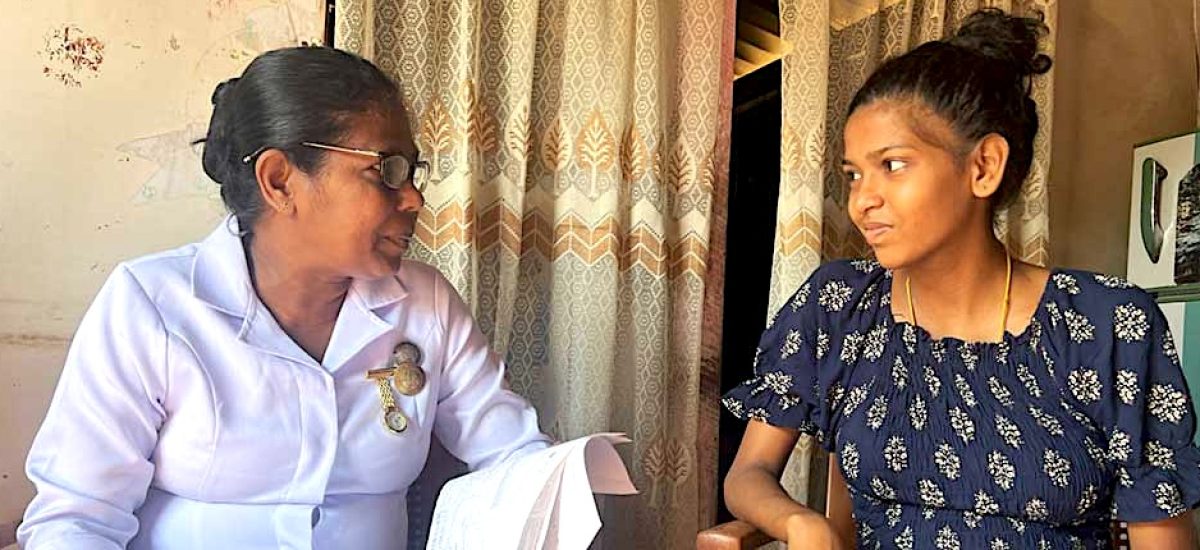
Several things worked together. The public health midwife is the heart of the system. Each one is responsible for a defined area of roughly 3,000 to 5,000 people. She registers pregnant women, visits them at home, brings them to antenatal clinics and helps the family act quickly when something goes wrong. A 2016 report counted at least 7,000 such midwives across the island.
Health services have long been free to the whole population, including in rural areas. A woman does not have to weigh the cost of a hospital against the needs of her other children. That single fact changes the decision to seek help early.
Sri Lanka has had civil registration since 1867 and began recording maternal deaths around 1900. Midwives keep registers of eligible families, pregnancies, births and immunisations. You cannot fix what you do not count.
A maternal death must be reported within 24 hours. A team visits the family, the records are gathered and the case is reviewed at field, hospital, district and national level with independent experts. The purpose is to learn what failed. It is not to find someone to blame. Many countries have such a policy on paper. Few have practised it so steadily.
The same case study notes that 89 percent of adult Sri Lankan women were literate at a time when the South Asian average was 43 percent. An educated woman is more likely to recognise danger signs, to use services and to be heard when she speaks.
None of this is glamorous. It is patient, public, unfashionable work, kept up over generations. The WHO sums it up as free and equitable services, professional midwifery, decisions based on data and continuous improvement in quality.
A system built over ninety years can still be damaged in a few. In August 2022, the UN warned that the health system was close to collapse. Hospitals were short of medicines and equipment. Power cuts and fuel shortages kept staff from reaching work and pregnant women had to queue for fuel to get to hospital. Some health workers were asked to bring their own basic supplies such as gloves. At that time the Ministry of Health estimated that 215,000 women were pregnant and UNFPA appealed for $10.7 million to protect their care.
Then came the departures. The Government Medical Officers’ Association said that more than 1,700 doctors left over two years, close to 10 percent of the country’s doctors. A peer reviewed study reported by The Sunday Times counted 1,489 doctors, including specialists, who left between 2022 and 2024. When two anaesthetists left one district general hospital in 2023, emergency surgery there was suspended for several weeks. An obstetrician cannot perform a safe emergency caesarean section without an anaesthetist.
The midwives are under pressure too. In 2024, the Sunday Times reported a shortage of about 3,000 midwives in the state sector, with delayed recruitment and unpaid allowances for travel and communication.
The maternal mortality figure has held up so far, which says much about the people inside the system. Yet the WHO has also pointed to a rise in low birth weight babies and has warned that poverty may be reducing pregnant women’s access to nutritious food. The damage of a crisis does not always show first in the death count.
When budgets are tight, community health work is an easy target. A midwife’s home visit makes no headlines. Her travel allowance looks small enough to postpone. The harm caused by cutting it appears slowly and by then it is hard to trace.
In the 1950s, maternal health services cost Sri Lanka about 0.28 percent of its national income and that share later fell as the system matured. Few public investments have returned so much for so little.
Three things seem worth holding on to whoever is in government. First, keep the midwife posts filled and supported. Recruitment that is approved but not carried out leaves villages uncovered. Second, protect the supply of essential maternity medicines and equipment ahead of other spending, so that no ward is left without basics again. Third, give health workers reasons to stay: fair pay, a clear career path and respect. This costs less than training their replacements.
Sri Lanka’s achievement does not belong only to Sri Lanka. It is the evidence the rest of us in South Asia use when we argue for more midwives, for free care and for honest death reviews at home.
If that example weakens, we all lose an argument we badly need to win. If it holds through these hard years, it will show something even more useful than the original success: that a fair health system, once built, can be kept.
Dr. Bhimi Daimari is an obstetrician-gynaecologist working in Assam, India.