

Photo courtesy of CHRD
The findings from the Chemmani excavations have renewed a painful question for families in the North: who are the people buried there, how did they die and why were they buried in this place? The report by Professor Raj Somadeva and archaeologist Anusha Wanninayake is an important contribution to the investigation but it does not settle those questions. Its evidence must be read carefully without turning a possible explanation into a proven fact or treating uncertainty as proof that nothing unlawful happened.
What the report says and what it cannot say
Published reporting on the third interim archaeological report says that it describes 574 people whose remains had been exhumed by the time covered in that report. A separate update reported that the total number recovered later reached 583. These figures refer to different reporting points and should not be confused. The published account also says the report’s age estimates were preliminary field assessments: about 41 per cent were classified as children and 22 per cent as infants – around 360 people in total. The report did not define those age categories or explain the high proportion.
The report records features that the authors consider relevant to burial practice. Many undisturbed skeletons were found with their hands placed over the abdomen or along the sides. The authors say this degree of consistency resembles some formal burials. At the same time, skulls did not face one uniform direction. Two individuals were found seated but the report says their posture alone cannot establish that they were buried according to a Hindu religious practice. These observations may inform further investigation; they do not identify the people or establish the circumstances of their deaths.
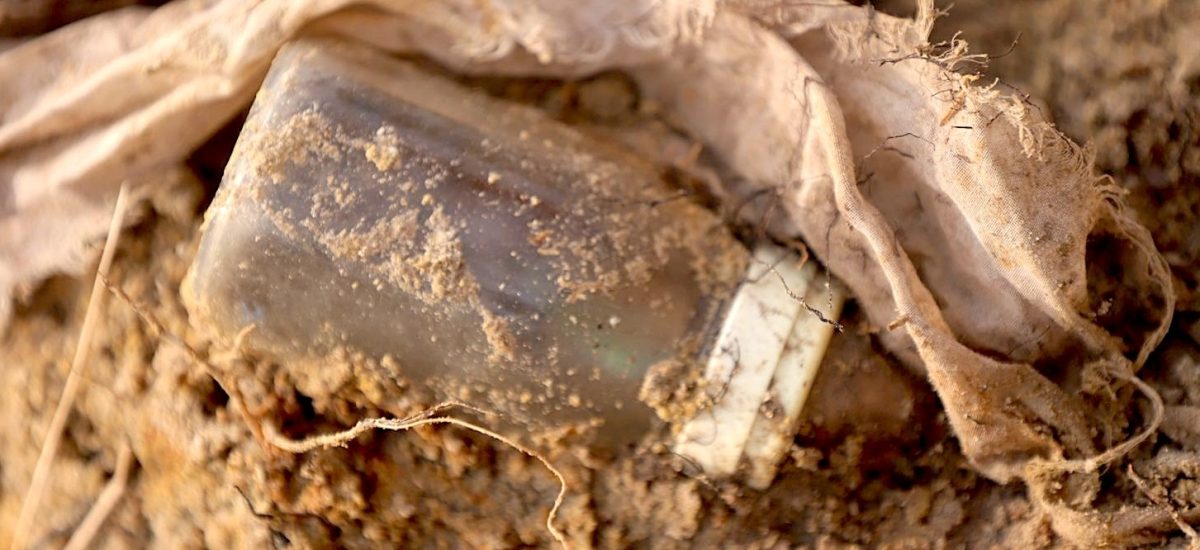
The excavation also recorded 170 artefact entries. These included rings, bangles, beads, amulets, coins, clothing-related items and iron fragments. Some iron pieces may be coffin fittings, the report suggests, while overlapping burials and disturbed remains may indicate successive episodes of burial rather than a single event. The authors describe these interpretations as provisional. The findings may help investigators understand how burials took place but artefacts and body position cannot, by themselves, determine whether a person died naturally or was killed.
The report’s discussion of an epidemic or natural disaster has attracted particular attention. The relevant passage is conditional: if the concentration of burials resulted from an epidemic or catastrophe, rapid disposal might help explain why few objects were placed with the dead. According to the published account, the report names no specific epidemic or disaster, cites no record of one and presents no skeletal evidence of disease. It also contains no scientific dating of the remains and no analysis of the bones for injury or disease. It does not determine when the people died, what killed them, who buried them or rule out unlawful killing.
That distinction matters. An explanation proposed to account for a lack of burial objects is not proof that an epidemic occurred. Nor does the suggestion that some burials resemble formal interment establish that every person was buried lawfully or that every death was natural. Those questions require different evidence.
The human consequences of uncertainty
For families of the disappeared, every new report carries hope and the risk of renewed distress. The discovery of remains may bring the possibility of identifying a missing relative but until identification is made, families remain caught between fear and hope. A report that describes archaeological patterns without establishing identities or causes of death cannot provide the answers they have waited decades to receive.
The number of infants and children identified in the report’s preliminary estimates is especially grave. It demands careful, specialist examination and clear explanations of how age was assessed. It does not, on its own, establish who the children were or how they died. Families need a process that treats each set of remains as a person to be identified, not simply as a number in a report.
The shifting public discussion also has consequences. If the conditional epidemic passage is presented as a conclusion, families may feel that their questions are being dismissed before the necessary tests are done. If allegations of state or military responsibility are presented as proven before evidence establishes them, the credibility of the investigation may also suffer. The responsible course is to investigate every plausible explanation against the evidence and make the results public.
The Human Rights Commission of Sri Lanka’s earlier fact finding report provides important context. In 2025, the Commission said that the burial conditions observed at the time gave rise to a reasonable likelihood of unlawful burials connected to extrajudicial killings. It also identified serious gaps in forensic expertise, dating and DNA capacity, funding and formal procedures. These were concerns and recommendations made at an earlier stage of the investigation; they are not a substitute for the later scientific findings. Taken together, the reports underline the need for a complete investigation rather than a premature verdict.
What should happen next
The Somadeva report is an archaeological report. It should be treated as one part of a broader medico-legal investigation. The published accounts available so far do not establish that the report itself sets out a full programme of next steps. The recommendations below therefore combine the tests needed to resolve its unanswered questions with the measures already urged by the Human Rights Commission.
The authorities should publish the complete report or a version that protects legitimate evidentiary and privacy concerns and explain how its different interim counts relate to the later total of 583 sets of remains. The age categories, assessment method, unexplained percentage, artefact records and limits of each conclusion should be made clear. Regular, factual updates should be provided to families and the public.
A properly resourced team should carry out forensic examination of the remains. This should include assessment for injury and disease, scientific dating, including bomb-pulse carbon dating where appropriate, and DNA comparison with voluntarily provided samples from relatives. The Human Rights Commission specifically recommended overseas expertise and facilities where needed, a secure DNA bank for families’ samples and wider ground penetrating radar surveys to establish whether more remains may lie nearby.
Investigators should test the competing explanations rather than favour one in advance. If epidemic or disaster is being considered, it should be checked against historical health and disaster records for the relevant place and period and against scientific findings from the remains. If unlawful killing is being considered, investigators should examine trauma evidence, burial context, disappearance records, witness accounts and relevant custody and security force records. The court should ensure that all evidence is preserved and that its handling is independently reviewable.
Families must be treated as participants in the search for truth. They need accessible information in Tamil, the opportunity to provide family histories and DNA samples voluntarily, appropriate psychosocial support and clear explanations when a match cannot be made. The Human Rights Commission also called for a formal procedure for mass grave investigations, regular official updates and an independent institution with authority to investigate and prosecute serious crimes by state officials.
Chemmani should not become another investigation remembered mainly for what it failed to establish. The report contributes valuable observations but it leaves the central questions open. That is not a reason to dismiss its findings; it is a reason to complete the work with scientific rigour, independence and transparency.
For the people of the North, inconclusive cannot become the final answer. The state’s responsibility is to determine who these people were, how they died and whether anyone was responsible and to explain the evidence to their families and the public. Truth will not be secured by speculation, political reassurance or accusation alone. It will be secured by testing the evidence, protecting the investigation from interference and refusing to let uncertainty become permanent.
Author’s note: This analysis is based on published accounts of the Somadeva–Wanninayake report and the Human Rights Commission’s 2025 fact finding report. The complete Somadeva report was not publicly accessible in the sources reviewed, so this article does not claim to summarise every page or attribute the recommendations above to its authors.